
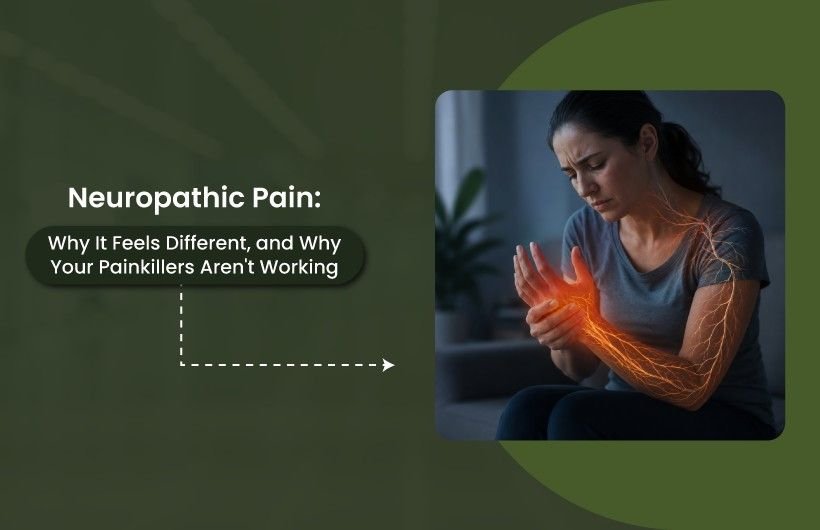
That burning sensation in your feet that won’t quit, even after rest? Or the electric jolt that shoots down your arm with no warning at all? If regular painkillers barely touch it, you may be dealing with neuropathic pain, a type of pain that comes from the nerves themselves rather than an injury you can see or point to.
It’s one of the more misunderstood forms of chronic pain, and one of the most frustrating, because by the time most patients reach a neuropathic pain specialist in Ahmedabad, they’ve already tried several rounds of over-the-counter medication with little to show for it. At Anamay Pain Clinic in Naranpura, we see this pattern often, and there’s a clear medical reason behind it.
Why Doesn’t Regular Painkiller Touch Nerve Pain?
Most pain you’ve experienced in your life, a sprained ankle, a cut, a pulled muscle, comes from damaged tissue sending signals through healthy nerves. Painkillers like ibuprofen work by calming inflammation at the site of that tissue damage.
Neuropathic pain is different. Here, the nerve itself is damaged or misfiring. It’s not reporting an injury elsewhere in the body; it’s generating false alarm signals on its own. That’s why a typical anti-inflammatory does little to help; there’s no inflammation to calm. The nerve is essentially short-circuiting.
This single distinction explains why so many patients spend months on the wrong medication before getting real relief.
What Does Neuropathic Pain Actually Feel Like?
Patients describe it in consistent terms, even though their underlying causes differ:
- A burning or scalding sensation, often in the feet or hands
- Sudden electric shock-like jolts
- Pins-and-needles tingling that doesn’t fade
- Numbness alternating with sharp pain in the same area
- Skin that hurts from a light touch, like a bedsheet or clothing (this is called allodynia)
If even one of these sounds familiar and it’s been going on for more than a few weeks, that’s a signal worth paying attention to.
Why Gujarat Sees So Much Diabetic Nerve Pain?
One cause stands out more than any other in our clinic and across Ahmedabad generally: diabetes. Gujarat has one of the highest diabetes prevalence rates in India, and prolonged high blood sugar slowly damages small nerve fibers, most often starting in the feet.
This is called diabetic peripheral neuropathy, and it typically begins as numbness or tingling in the toes before working its way up the foot and, eventually, the hands. The frustrating part is that many patients don’t connect their foot discomfort to their diabetes at all. They assume it’s poor circulation, old age, or tight shoes, and the nerve damage continues quietly in the background.
If you have diabetes and notice burning, numbness, or reduced sensation in your feet, this is worth raising with your doctor even if your blood sugar is currently well controlled.
In our experience, the patients who do best are the ones who come in early, often after noticing something as small as not feeling a stone in their sandals or a hot bath feeling lukewarm. These small changes in sensation are usually the first sign, well before the burning or tingling becomes constant. Catching diabetic neuropathy at this stage gives us far more room to slow its progress.
Other Common Causes We See
Diabetes isn’t the only trigger. In our practice, neuropathic pain commonly traces back to:
Postherpetic neuralgia. Pain that lingers in the skin long after a shingles outbreak has cleared, sometimes for months or years.
Trigeminal neuralgia. Suddenly, intense facial pain was triggered by something as simple as chewing or brushing teeth.
Nerve compression. A herniated disc or sciatica is pinching a nerve root in the spine.
Chemotherapy-induced neuropathy. Certain cancer treatments can damage peripheral nerves as a side effect, leaving patients with tingling or numbness in their hands and feet during or after treatment. Having worked in the pain and palliative care departments at Tata Memorial Hospital and Gujarat Cancer Research Institute, this is an area were careful, compassionate management matters.
Nerve injury after surgery or trauma. Sometimes a nerve is bruised or cut during an operation or accident, and the pain signal never fully resets.
How Is Neuropathic Pain Diagnosed?
Getting the diagnosis right matters as much as the treatment itself. A proper workup usually includes a detailed history of when the pain started and what it feels like, a physical exam testing sensation and reflexes, and sometimes nerve conduction studies to measure how well signals are travelling along the affected nerve. Blood tests are often added to rule out underlying diabetes or vitamin B12 deficiency, both common and treatable contributors.
This step is what separates effective, targeted treatment from months of trial-and-error with medication.
How Neuropathic Pain Is Actually Treated?
Treatment isn’t one-size-fits-all, and it rarely relies on a single approach. A combined plan tends to work best.
Nerve-specific medications. Unlike standard painkillers, drugs like gabapentin and pregabalin calm overactive nerve signals directly. Certain antidepressants, such as duloxetine, are also used at low doses for the same nerve-calming effect, not for mood, even though that surprises many patients when they first hear it.
Topical treatments. Lidocaine patches or capsaicin cream can numb or desensitize a localized painful area without affecting the rest of the body.
Interventional procedures. For pain that doesn’t respond well enough to medication, targeted nerve blocks or pulsed radiofrequency can interrupt the pain signal directly at its source. These are outpatient procedures done under local anesthesia, with most patients home the same day.
Physiotherapy. Movement-based therapy helps maintain strength and circulation in affected limbs, which is particularly important for diabetic neuropathy in the feet.
If your sciatica has been a long-running issue alongside nerve symptoms elsewhere, it’s worth understanding the difference between general back pain and nerve compression. We’ve covered this in detail in our guide comparing lower back pain and sciatica.
When Should You See a Specialist?
Most people wait too long. A reasonable rule: if burning, tingling, or numbness has lasted more than two to three weeks, or if it’s disrupting your sleep or daily activity, it’s time for an evaluation rather than another round of over-the-counter pills. Earlier diagnosis generally means a wider range of treatment options and a better long-term outcome.
This is especially true for diabetic patients, since nerve damage tends to progress gradually and silently if left unaddressed.
Living With Nerve Pain: What Helps Day to Day
Alongside clinical treatment, a few habits genuinely make a difference for patients managing neuropathic pain:
Keeping blood sugar within target range if you’re diabetic, since this is the single biggest factor in slowing further nerve damage. Check your feet daily for cuts or sores you might not feel due to numbness. Limiting alcohol, which can worsen nerve damage over time. Prioritizing sleep, since poor sleep tends to amplify pain perception the following day.
None of these replace medical treatment, but they support it meaningfully.
Living with chronic pain that others can’t see is genuinely isolating, and we understand why. If you’ve been managing nerve pain on your own for too long, our team at Anamay Pain Clinic is ready to listen and help you build a plan that fits your condition. Chat with us on WhatsApp if you’d like to ask a question before booking.
Conclusion
Neuropathic pain isn’t something you simply have to live with, and it isn’t something regular painkillers are designed to fix. Understanding why it feels the way it does is the first step toward getting treatment that targets the problem. If burning, tingling, or shooting nerve pain has been part of your daily life for weeks or longer, contact us at Anamay Pain Clinic to start working toward real, lasting relief.
Book Your Assessment at Anamay Pain Management Clinic, Ahmedabad
Take the first step towards a pain-free life with expert guidance and advanced regenerative treatments tailored to your condition.
Frequently Asked Questions
Q: Is neuropathic pain the same as regular nerve pain from a pinched nerve?
A: Not exactly. A pinched nerve, like sciatica, is one specific cause of neuropathic pain. The broader term covers any pain originating from nerve damage or dysfunction, regardless of the cause.
Q: Why do antidepressants get prescribed for nerve pain?
A: At low doses, certain antidepressants alter how nerves transmit pain signals. They’re not used to treating depression in this context, even though that’s a common point of confusion for patients.
Q: Can diabetic nerve pain be reversed?
A: Existing nerve damage usually can’t be fully reversed, but tight blood sugar control can slow or halt further progression, and symptoms can often be meaningfully reduced with proper treatment.
Q: Does neuropathic pain ever go away completely?
A: It depends on the cause. Pain from a resolved nerve compression may be fully clear. Pain from ongoing conditions like diabetes usually requires long-term management rather than a one-time cure.
Q: Is nerve testing painful?
A: Nerve conduction studies involve mild, brief electrical pulses. Most patients describe it as uncomfortable rather than painful, and it’s over within minutes.
This article is for informational purposes only and is not a substitute for professional medical advice, diagnosis, or treatment. Always consult Dr. Megha Shah or a qualified pain specialist before starting any treatment for your condition.