
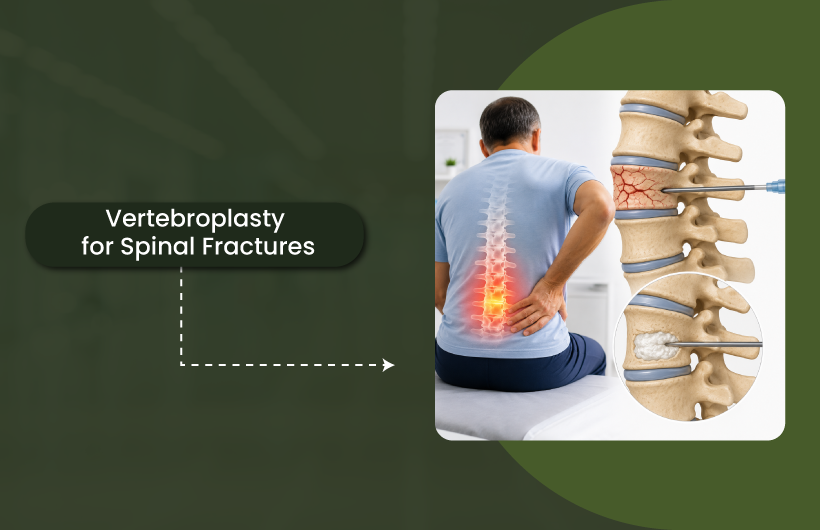
A sudden, sharp pain in the back after a minor fall, or even after bending to pick something up, can be more than a strained muscle. In older adults, especially those with osteoporosis, it’s often a sign of a vertebral compression fracture: a small crack or collapse in one of the bones of the spine.
If you’ve been told surgery is the only option for a spinal fracture, it’s worth getting a second opinion before deciding.
Vertebroplasty is one of the treatments we offer at Anamay Pain Clinic, and it’s often a much smaller procedure than patients expect. This post walks through who’s actually a good candidate for vertebroplasty treatment in Ahmedabad, what the procedure involves, and what recovery realistically looks like.
What Is a Vertebral Compression Fracture?
The spine is made up of stacked bones called vertebrae. When one of these bones weakens, most commonly from osteoporosis, but sometimes from a tumour or significant trauma, it can crack or partially collapse under normal everyday pressure.
This is different from a dramatic spinal injury. Many compression fractures happen during ordinary activities: coughing hard, stepping off a curb, or lifting a light bag. That’s part of why they’re so often missed at first, the pain gets blamed on a “pulled muscle” rather than a fracture.
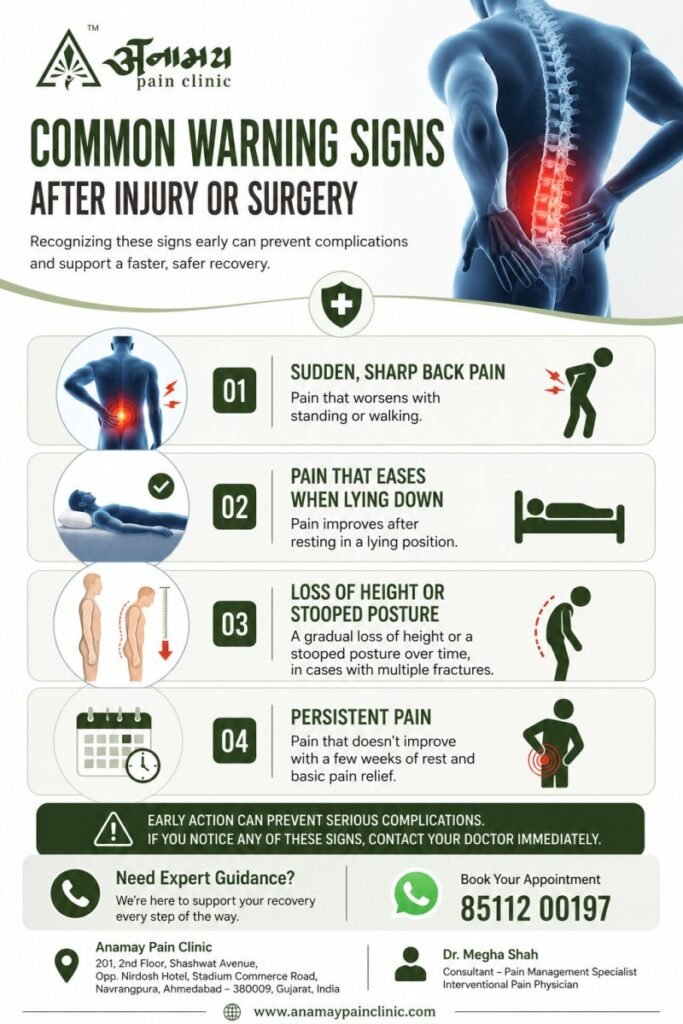
Common signs of Vertebral Compression Fracture
Common signs:
- Sudden, sharp back pain that worsens with standing or walking
- Pain that eases when lying down
- A gradual loss of height or a stooped posture over time, in cases with multiple fractures
- Pain that doesn’t improve with a few weeks of rest and basic pain relief
Compression fractures are far more common than most patients realize, particularly in postmenopausal women and older adults with low bone density. Because the pain often comes on gradually or after a seemingly minor movement, many patients assume it’s just “getting older” and delay getting it checked, sometimes for months, which allows the fracture to heal in a collapsed position that’s harder to treat later.
What Is Vertebroplasty?
Vertebroplasty is a minimally invasive procedure where a small amount of medical-grade bone cement is injected directly into the fractured vertebra, under imaging guidance. The cement hardens quickly, stabilizing the bone from the inside and reducing the pain that comes from micro-movement at the fracture site.
It’s performed through a needle, not an open incision, and most patients go home the same day or the next. This is a meaningfully different experience than spinal fusion surgery, which involves hardware, a longer hospital stays, and a much longer recovery.
That said, vertebroplasty isn’t right for everyone. It works best for fractures that are relatively recent, generally within a few weeks to a couple of months, and it doesn’t correct the underlying cause of bone weakness, so ongoing osteoporosis management still matters afterward.
Who’s a Good Candidate?
Vertebroplasty tends to be recommended for patients who have:
- A confirmed compression fracture on imaging (X-ray, MRI, or CT), with pain that matches the location
- Pain that hasn’t responded well to rest, bracing, or oral pain medication after several weeks
- No signs of significant nerve compression or spinal instability requiring more extensive surgery
- A fracture that’s still relatively fresh, since older, fully healed fractures respond less predictably
Patients with very advanced osteoporosis, multiple fractures, or complicating medical conditions still need careful evaluation, vertebroplasty is a good option for many, but not automatically the right one for everyone with a fracture. Some fractures respond well enough to bracing, medication, and lower back pain treatment approaches that a procedure isn’t needed at all. This is exactly the kind of judgment call that benefits from a proper consultation rather than a quick decision made from an ER visit alone.
What to Expect: Before, During, and After
Before the procedure
Dr. Megha Shah reviews imaging to confirm the fracture is a good match for vertebroplasty and rules out other causes of the pain, such as infection or a tumour.
During the procedure
The patient lies face-down under local anaesthesia, sometimes with light sedation. Using C-arm imaging for guidance, a thin needle is guided into the fractured vertebra, and the bone cement is injected carefully to fill the fracture. The whole procedure typically takes under an hour.
Afterward
Many patients notice pain relief within a day or two, sometimes sooner, as the cement stabilizes the bone. Walking is usually encouraged soon after, and most people return to normal light activity within a few days, though heavy lifting and strenuous activity are avoided for longer while the body adjusts.
Recovery timelines
Vary depending on how many vertebrae were treated and the patient’s overall bone health. A patient with a single, recent fracture and otherwise good bone density often feels close to normal within a week or two. Someone with multiple fractures, or bone density low enough to raise concern about further fractures, may need a more gradual return to activity alongside a longer-term osteoporosis treatment plan.
It’s worth being direct here: vertebroplasty treats the fracture that’s already happened. It doesn’t prevent future fractures on its own, so a follow-up plan for bone health, often involving a physician managing osteoporosis medication, calcium and vitamin D status, and fall-prevention steps, matters just as much as the procedure itself.
Conclusion
A spinal compression fracture doesn’t have to mean months of pain or a major surgery. For the right patient, vertebroplasty offers meaningful relief through a same-day, minimally invasive procedure, but figuring out whether you’re the right candidate takes an honest evaluation, not a rushed decision.
Dr. Megha Shah’s approach, informed by her work as a pain management specialist, is to look at the whole picture: the fracture itself, your bone health, and what will get you back on your feet fastest. If a recent fall or sudden back pain has you wondering about a fracture, contact us to schedule an evaluation.
For quicker questions, you’re welcome to message us on WhatsApp directly.
Book Your Assessment at Anamay Pain Management Clinic, Ahmedabad
Take the first step towards a pain-free life with expert guidance and advanced regenerative treatments tailored to your condition.
Frequently Asked Questions
Is bone cement in the spine permanent?
Yes, the cement remains in place permanently once it hardens, but it’s inert and generally well-tolerated long-term.
How soon after a fracture can vertebroplasty be done?
It’s usually most effective within the first few weeks to a couple of months after the fracture, though this varies by case.
Will vertebroplasty prevent future fractures?
No. It treats the existing fracture but doesn’t strengthen the rest of the spine, which is why ongoing osteoporosis management matters alongside the procedure.
Is vertebroplasty painful?
The procedure is done under local anaesthesia, so discomfort during the injection is minimal. Some soreness at the needle site for a day or two is normal.
What if I’m not a good candidate for vertebroplasty?
Not every fracture need cement. Some heal well with bracing, pain management, and physical therapy alone, before any procedure is considered.
How is vertebroplasty different from kyphoplasty?
Kyphoplasty adds a step of inflating a small balloon before injecting cement, aiming to restore some vertebral height. Whether either is appropriate depends on the specific fracture.
This article is for informational purposes only and is not a substitute for professional medical advice, diagnosis, or treatment. Always consult Dr. Megha Shah or a qualified healthcare provider before starting any treatment.