
When a family member is living with cancer or another serious illness, choosing the right care can be confusing. Many families ask about palliative care vs hospice care because both focus on comfort, pain relief and quality of life. However, they have different roles.
Palliative care can begin at any stage of a serious illness, even while treatment is continuing. Hospice care mainly focuses on comfort and support during the final phase of life. Understanding this difference can help patients and families make informed decisions.
Patients experiencing persistent pain or symptoms of a serious illness can learn about the services available at Pain Management Clinic in Ahmedabad.
What Is the Difference Between Palliative Care and Hospice Care?
The main difference is when the care begins and what the treatment aims to achieve.
Palliative care helps manage pain, physical symptoms and emotional stress caused by a serious illness. It can be provided along with treatments such as chemotherapy, radiation therapy or other medical care.
Hospice care focuses on comfort when the main goal of care has shifted towards quality of life during the final stage of an illness.
| Feature | Palliative Care | Hospice Care |
|---|---|---|
| When does it begin? | At any stage of a serious illness | Usually near the end of life |
| Main goal | Relieve symptoms and improve quality of life | Provide comfort, dignity and support |
| Cancer treatment | Can continue alongside cancer treatment | Mainly focuses on comfort rather than curing the disease |
| Pain relief | Helps manage pain and other symptoms | Also provides pain and symptom relief |
| Family support | Helps patients and caregivers manage illness | Supports patients and families during end-of-life care |
Hospice eligibility and available services vary by country and provider. In India, families should discuss local options with their treating doctor.
What Is Palliative Care, and Who Needs It?
Palliative care is specialised medical care for people living with serious illnesses. It aims to reduce suffering and help patients live as comfortably as possible.
It is not limited to patients with advanced cancer. People receiving active treatment may also benefit from this care.
Palliative Care Components
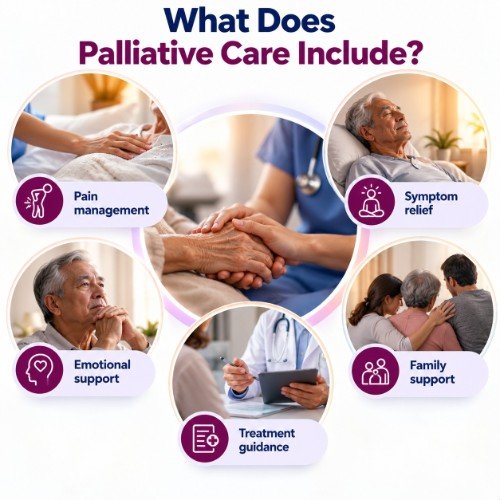
What Does Palliative Care Include?
Depending on the patient’s needs, palliative care may include:
- Pain management: Helping reduce cancer pain and persistent discomfort.
- Symptom relief: Managing nausea, breathlessness, fatigue and sleep problems.
- Emotional support: Helping patients cope with fear, stress and uncertainty.
- Treatment guidance: Helping patients understand their care options.
- Family support: Guiding caregivers on how to support their loved one.
For example, a patient receiving chemotherapy may experience pain, nausea or weakness. Palliative care can help manage these symptoms while the cancer treatment continues.
When Should a Patient Consider Palliative Care?
A patient may benefit from palliative care when pain or other symptoms begin affecting daily life.
Common reasons include:
- Cancer pain that affects sleep or movement.
- Side effects from chemotherapy or radiation therapy.
- Breathlessness, nausea or ongoing fatigue.
- Emotional distress related to a serious illness.
- Difficulty managing symptoms at home.
Palliative care can also support people with serious heart, lung, kidney and neurological conditions. It is best to discuss these needs with a qualified doctor rather than waiting until symptoms become severe.
What Is Hospice Care, and When Is It Needed?
Hospice care is designed for patients approaching the end of life when comfort becomes the main goal of care.
It may be considered when an illness has progressed and treatments intended to cure or control it are no longer suitable or are no longer aligned with the patient’s wishes.

Hospice Care Support Infographic
What Support Can Hospice Care Provide?
Depending on the service available, hospice care may include:
- Pain relief and symptom management.
- Nursing and medical support.
- Emotional support for patients and family members.
- Guidance for caregivers.
- Support with comfort-focused care planning.
- Bereavement support for families, where available.
Hospice care may be provided at home or in a dedicated facility, depending on local services.
Choosing hospice care does not mean abandoning a patient. The aim is to provide appropriate care, reduce suffering and respect the patient’s wishes.
Can Palliative Care Continue During Cancer Treatment?
Yes. Palliative care can often be provided alongside cancer treatment.
For example, a patient receiving chemotherapy may have pain, poor appetite, nausea or tiredness. The oncology team continues to manage the cancer, while palliative care helps address these symptoms and improve comfort.
Palliative care does not automatically mean that cancer treatment has stopped or that the patient is nearing the end of life.
Families who want to understand this further can read our guide on how palliative care can help during chemotherapy.
How Can Families Choose the Right Care?
The right approach depends on the patient’s condition, symptoms, treatment options and personal wishes.
Before planning, families can ask the treating doctor:
- Can the patient continue cancer treatment while receiving palliative care?
- Which symptoms can be managed with additional support?
- Would hospice or end-of-life care be appropriate now?
- What care options are available at home or in a hospital?
- How can the family help the patient remain comfortable?
For patients with advanced cancer, families may also find our guide on supporting a loved one with advanced cancer through palliative care helpful.
A discussion with the medical team can help families understand the benefits and limits of each option. The patient’s comfort, preferences and dignity should remain central to the decision.
Palliative Care Support at Anamay Pain Clinic
Palliative care aims to reduce suffering, manage symptoms and improve quality of life for patients with serious illnesses. The appropriate care plan depends on the patient’s condition, symptoms and treatment goals.
Patients and families can explore the services offered by the Palliative Care Clinic and discuss suitable options with a qualified healthcare professional.
If you or your loved one needs help with cancer pain or palliative care options, contact the clinic on WhatsApp to enquire about an appointment.
Conclusion
Understanding palliative care vs hospice care can help families make informed decisions during a serious illness. Palliative care can support patients at different stages of illness, including during active cancer treatment. Hospice care focuses mainly on comfort and quality of life near the end of life.
Both approaches aim to reduce suffering and support patients with dignity. Speak with a qualified healthcare professional to understand which type of care is suitable for your loved one.
Book Your Consultation with Dr. Megha Shah Today.!
A highly experienced pain specialist providing personalized, advanced, and minimally invasive treatments for long-lasting pain relief and improved quality of life.
Frequently Asked Questions
Is palliative care the same as hospice care?
No. Palliative care can begin at any stage of a serious illness. Hospice care mainly focuses on comfort during the final phase of life.
Can a patient receive palliative care during chemotherapy?
Yes. Palliative care can help manage pain, nausea, fatigue and other symptoms while cancer treatment continues.
Does palliative care mean giving up on treatment?
No. It can be provided alongside treatment intended to cure or control an illness.
Does hospice care available in India?
Hospice and end-of-life care services are available in some parts of India. The services offered vary by location and provider, so families should ask their treating doctor about local options.
This article is for general educational purposes only. It is not a substitute for professional medical advice, diagnosis or treatment. Every patient’s needs are different. Consult a qualified healthcare professional for advice about palliative care, hospice care and cancer pain management. Do not start, stop or change any treatment without consulting your treating doctor.