Head pain is one of the most common health concerns affecting people today, and almost everyone experiences a headache at some point in life. While many headaches are mild and fade on their own, others can be intense enough to disrupt your work, routine, and sleep. Understanding the different types of head pain, their causes, and the right treatment options is essential for long-lasting relief.
Many patients visit a Pain Management Clinic with recurring headaches, neck heaviness, or constant pressure around the temples. According to Dr. Megha Shah, headaches often worsen when ignored, but the positive news is that proper diagnosis makes treatment far more effective.
In this guide, you will explore the common types of headaches, their causes, key symptoms, and the most effective ways to manage and prevent them.
What Are the Different Types of Head Pain?
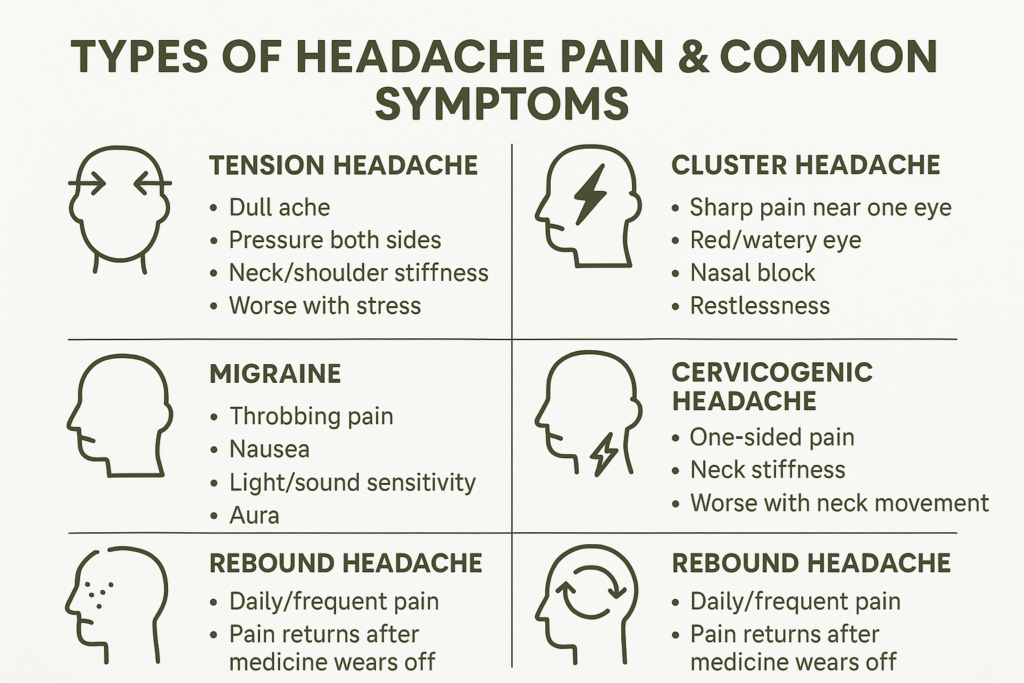
There are several types of headaches, but they mainly fall into two large categories: primary headaches and secondary headaches.
1) Tension Headaches
Tension headaches are the most common type of headache. They usually feel like a tight band around your head.
Common symptoms include:
- Dull, aching pain
- Pressure on both sides of the head
- Stiff neck and shoulder muscles
- Headache that gets worse with stress
Reasons:
Tension headaches often happen due to stress, poor posture, lack of sleep, long hours on screens, and muscle tightness in the neck.
Treatment:
Relaxation, stretching, hydration, rest, and correcting posture can provide quick relief. Medication may help if the pain continues.
2) Migraine Headaches
Migraines headaches are more intense and can last for hours or even days. Many people experience throbbing pain on one side of the head.
Symptoms include:
- Pulsating or throbbing pain
- Nausea or vomiting
- Sensitivity to light or sound
- Aura (flashes of light, blind spots before the headache starts)
Reasons:
Migraine triggers include hormonal changes, loud noise, strong smells, stress, bright light, lack of sleep, dehydration, and certain foods like chocolate, cheese, and caffeine.
Treatment:
Migraine treatment focuses on lifestyle control, rest in a dark room, staying hydrated, and avoiding personal triggers. Medical treatment is essential for repeated or severe migraine attacks.
3) Cluster Headaches
Cluster headaches are extremely painful and usually occur in “clusters,” meaning several episodes in a day for weeks or months.
Symptoms include:
- Sharp, burning pain around one eye
- Redness or watering of the affected eye
- Nasal blockage on the same side
- Restlessness during the attack
Reasons:
Cluster headaches are linked to nerve activation behind the eye. They are more common in men and people who smoke or drink alcohol.
Treatment:
Since the pain is intense, medical care is often required. Quick-relief treatments and preventive medicines help reduce severity.
4) Sinus Headaches
Sinus headaches are caused by inflammation or infection in the sinuses.
Common symptoms:
- Pressure around the forehead, eyes, and cheeks
- Blocked or runny nose
- Pain that increases when bending forward
Reasons:
Cold, allergies, or sinus infections can cause sinus headaches.
Treatment:
Treating sinus infection, steam inhalation, nasal sprays, and warm compresses are helpful.
5) Cervicogenic Headaches
These headaches start in the neck but are felt in the head.
Symptoms include:
- Pain on one side of the head
- Neck stiffness
- Pain increases with neck movement
Reasons:
Neck injury, poor posture, disc problems, or arthritis.
Treatment:
Physical therapy, posture correction, and pain management treatments at Anamay Pain Clinic are highly effective.
6) Rebound Headaches
These headaches occur due to the overuse of painkillers.
Symptoms:
- Daily or frequent headaches
- Pain that returns when the medicine wears off
Reasons:
Taking pain medicines too often can lead to dependence, causing the headache to come back repeatedly.
Treatment:
Medication control under doctor guidance and lifestyle adjustments.
7) Secondary Headaches
These headaches occur due to an underlying health issue, such as an infection, high BP, dehydration, or injury.
Reasons may include:
- Fever
- Dehydration
- Head injury
- Eye strain
- High blood pressure
Treatment:
Treating the main cause relieves the headache.
What Are the Common Reasons Behind Head Pain?
Headaches happen for many reasons, and identifying the cause helps in selecting the right treatment. Common head pain causes include:
Lifestyle Factors
- Stress and anxiety
- Lack of sleep
- Long work hours
- Skipping meals
- Excess screen-time
Environmental Triggers
- Loud noises
- Bright light
- Strong smells
- Weather changes
Medical Conditions
- Sinus infection
- Hormonal changes
- High blood pressure
- Eye problems
- Neck or spine issues
Habits
- Smoking
- Alcohol use
- Caffeine overuse
According to Dr. Megha Shah, most headaches can be controlled with early diagnosis and proper treatment. Ignoring symptoms can make the pain chronic and harder to treat.
How Are Head Pain Causes and Treatment Managed at a Pain Clinic?
Headache Treatment in Ahmedabad At Anamay Pain Clinic focuses on personalised care tailored to each patient’s condition. Through a thorough evaluation, specialists identify the exact type of headache and its underlying cause to provide effective and targeted relief.
1) Medical Evaluation
The doctor checks your symptoms, lifestyle, posture, and previous medical history. Sometimes, scans or tests are recommended.
2) Personalised Treatment Plan
Treatment may include:
- Medication
- Physiotherapy
- Targeted pain-relief injections
- Posture correction
- Stress management
- Lifestyle changes
These treatments help reduce pain, prevent frequent headaches, and improve quality of life.
3) Long-Term Management
Chronic headaches require long-term care. Dr. Megha Shah helps patients identify triggers and provides preventive guidance, so the headaches do not return frequently.
When Should You See a Doctor for Head Pain?
Not every headache is serious, but you must seek expert help if you notice:
- Head pain lasts for many days
- Frequent headaches that disturb sleep
- Neck pain with headache
- Vomiting or vision changes
- Suddenly severe headache
- Headaches after an injury
Expert Tips See a Pain Management Specialist early to avoid complications and ensure proper diagnosis. Timely treatment not only addresses the root cause but also provides long-term relief and better quality of life.
Final Thoughts
Understanding the different types of head pain and their underlying causes is the first step toward finding real relief. While many headaches are harmless, persistent or recurring pain should never be ignored. With an accurate diagnosis and a personalized treatment approach, most headaches can be effectively managed, helping you regain comfort and improve your quality of life.
If you’re struggling with frequent or severe headaches, consulting a Pain Management Specialist in Ahmedabad can make all the difference. The expert team at Anamay Pain Clinic is dedicated to offering precise solutions and long-lasting relief.