
Shoulder pain can be one of the most frustrating musculoskeletal issues, often restricting your daily activities, disturbing your sleep, and impacting your overall quality of life. At Anamay Pain Clinic, a leading Pain Management Clinic in Ahmedabad, we frequently treat patients who describe their shoulders as “stuck,” “frozen,” or difficult to move. In many cases, this condition is known as frozen shoulder (adhesive capsulitis). In this blog, Dr Megha Shah explains what frozen shoulder is, how to identify its symptoms, and the most effective treatment and recovery options, especially for those looking for expert shoulder pain management in Ahmedabad.
What Is a Frozen Shoulder?
Frozen shoulder, medically known as adhesive capsulitis, is a condition in which the capsule of connective tissue surrounding the shoulder joint becomes inflamed, thickened, and stiff. Over time, this tightening restricts both active and passive shoulder movements. Simply put, the more pain you experience, the less you move your shoulder, eventually leading to a stiff, “frozen” joint.
Although the exact cause is not fully understood, frozen shoulder typically progresses through three stages:
- Freezing (painful) stage — a gradual onset of pain accompanied by increasing stiffness.
- Frozen (adhesive) stage — pain may stabilise or decrease, but significant stiffness remains.
- Thawing (recovery) stage — a gradual restoration of shoulder mobility over time.
This condition can naturally last from 1 to 3 years; however, effective shoulder pain treatment in Ahmedabad can help reduce both pain and stiffness, allowing faster recovery and improved shoulder function.
What Are the Symptoms of Frozen Shoulder?
When should you suspect frozen shoulder symptoms
The signs usually develop slowly, sometimes over weeks or months:
- Dull, aching pain in the shoulder that worsens with movement
- Pain may worsen at night, interfering with sleep
- Stiffness or difficulty raising your arm overhead, behind your back, or out to the side
- Loss of both active (you move it) and passive (someone moves it for you) range of motion
- Gradual progression: early on, pain dominates; later, stiffness dominates
The stages correlate roughly as:
- Freezing: pain gradually increases, and motion becomes limited
- Frozen: pain may lessen somewhat, but motion remains restricted
- Thawing: gradual improvement in range of motion, less pain
Some patients report being unable to reach overhead, reach behind their back or into the back seat of a car. These functional limitations often lead them to seek evaluation by a specialist.
How Is Frozen Shoulder Diagnosed?
Diagnosis of frozen shoulder is primarily clinical, with supporting imaging to exclude other causes:
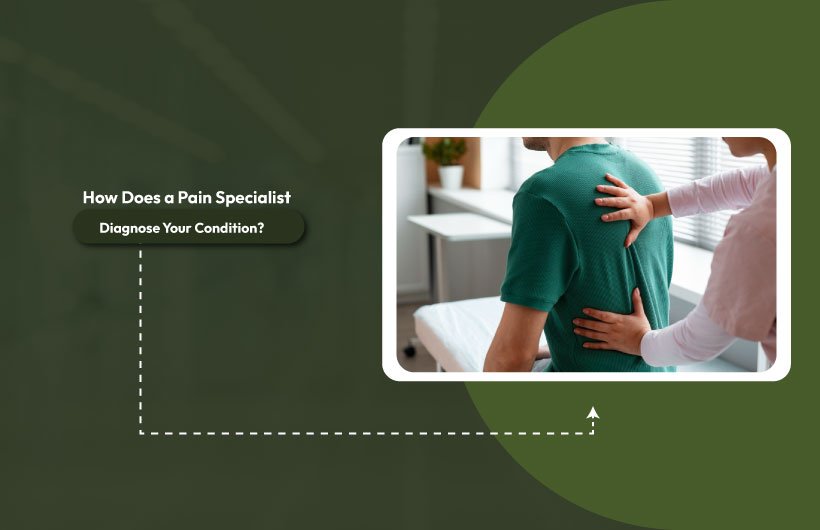
History and Physical Examination
- The doctor (or specialist) will take a detailed history: onset, pattern of progression, aggravating/relieving factors
- On exams, they will measure active and passive ranges of motion; in adhesive capsulitis, both are limited.
- Examination helps differentiate from rotator cuff tears, osteoarthritis, bursitis, or cervical spine causes
Imaging
- Plain X-ray may be used to exclude arthritis, fractures, or bone abnormalities
- MRI or ultrasound are typically not needed solely to diagnose frozen shoulder, but may be used when there is suspicion of additional pathology (e.g. rotator cuff tear)
Because frozen shoulders are a diagnosis of exclusion, ruling out other shoulder problems is a key step before confirming it.
What Are the Treatment Options?
When people search for “frozen shoulder treatment,” they are often exploring a mix of conservative, interventional, and surgical approaches. At Anamay Pain Clinic, we aim to tailor the plan to each patient’s stage, symptoms, comorbidities, and recovery goals. Below is a breakdown.
Conservative (Non-operative) Treatments
- Pain relief and anti-inflammation
Nonsteroidal anti-inflammatory drugs (NSAIDs) or analgesics may reduce pain and swelling.
Applying hot and cold compresses can relieve discomfort.
Corticosteroid injections directly into the shoulder joint can help reduce inflammation and break the pain cycle. - Physical therapy and stretching / range-of-motion exercises
A physical therapist guides you through stretching, passive and active motion exercises to loosen the joint capsule.
Home exercises are crucial; infrequent or inconsistent therapy is often ineffective. - Advanced injections / combined methods
One newer approach used at advanced centres is combining brisement (injecting fluid to stretch the capsule), nerve block, and immediate physical therapy. This “combo therapy” may accelerate recovery.
In brisement, a large-volume injection (e.g. 20 mL) with steroid + anaesthetic + sterile fluid is used under imaging guidance to distend the capsule.
If these methods don’t yield sufficient improvement after 9–12 months (or earlier in severe cases), interventional or surgical options may be considered.
Interventional / Surgical Options
- Manipulation under anaesthesia (MUA)
While the patient is anaesthetised, the physician forcibly moves the shoulder to break adhesions in the capsule. - Arthroscopic capsular release
Small incisions and instruments are used to cut through constricted segments of the joint capsule, freeing up motion. This is often combined with physical therapy. - Some physicians combine MUA with arthroscopic release for the best results.
Dr Megha Shah carefully assesses whether a patient is a candidate for surgical intervention only after thorough conservative efforts and when the benefit outweighs the risk.
Expert Tips for Faster Recovery
Here are practical, expert-driven tips by Dr Megha Shah to help you recover more smoothly from frozen shoulder:
- Start early — Don’t delay seeking help if shoulder pain or stiffness progresses. Early intervention often leads to faster recovery.
- Be diligent with home exercises — Even if you are receiving physical therapy at the clinic, you must do daily stretching and motion work at home. The therapeutic benefit comes from consistency.
- Use pain as your guide — Some discomfort is expected; avoid aggressive stretches that provoke severe pain or injury.
- Combine modalities — Use steroid injections (if suitable), heat or cold, TENS, and stretching together under supervision.
- Monitor underlying conditions — If you have diabetes, thyroid disease, or other systemic conditions, keep those well controlled; they affect healing.
- Maintain realistic expectations — Though many patients recover fully or near-fully within 1–2 years, motion returns more gradually than pain relief.
- Follow up with the specialist — Periodic evaluation by a frozen shoulder specialist in Ahmedabad ensures the plan is adjusted as needed and complications are avoided.
With the right care, a patient at Anamay Pain Clinic might recover faster and more comfortably than if left unmanaged.
When to See a Pain Management Specialist for Frozen Shoulder Pain
Knowing when to see a Pain Management Specialist is essential if you’re experiencing ongoing discomfort or stiffness in your shoulder. A frozen shoulder can worsen over time without timely intervention, so recognising the right moment to seek expert help is crucial.
You should visit a Pain Management Specialist if:
- You have persistent shoulder pain that doesn’t improve with rest, home care, or medication.
- Your shoulder stiffness is increasing, making it hard to perform daily tasks such as lifting your arm, reaching overhead, or dressing.
- The pain is disturbing your sleep or affecting your overall quality of life.
- You’ve tried physiotherapy or conservative treatments but haven’t seen noticeable improvement.
- You have underlying health conditions like diabetes or previous shoulder injuries that can make frozen shoulder symptoms worse.
A Pain Management Specialist can accurately diagnose the stage of frozen shoulder, create a customised treatment plan, and use advanced therapies to relieve pain and restore movement. Early consultation ensures better outcomes and a quicker return to a pain-free, active lifestyle.
Conclusion
Frozen shoulder is a painful condition that gradually limits shoulder mobility and affects daily activities. Fortunately, with early diagnosis, the right combination of treatments, and consistent rehabilitation, most patients experience significant pain relief and improved function. At Anamay Pain Clinic, Dr Megha Shah and our team specialise in pain management specialist in Ahmedabad, providing personalised care for those seeking a frozen shoulder specialist in Ahmedabad.
Understanding the role of a pain management specialist is crucial in addressing stiffness, persistent pain, and limited mobility effectively. If you’re experiencing shoulder discomfort and are in or around Ahmedabad, don’t delay early evaluation and treatment often lead to the best outcomes. The sooner you act, the easier it is to thaw your shoulder and return to your normal life.