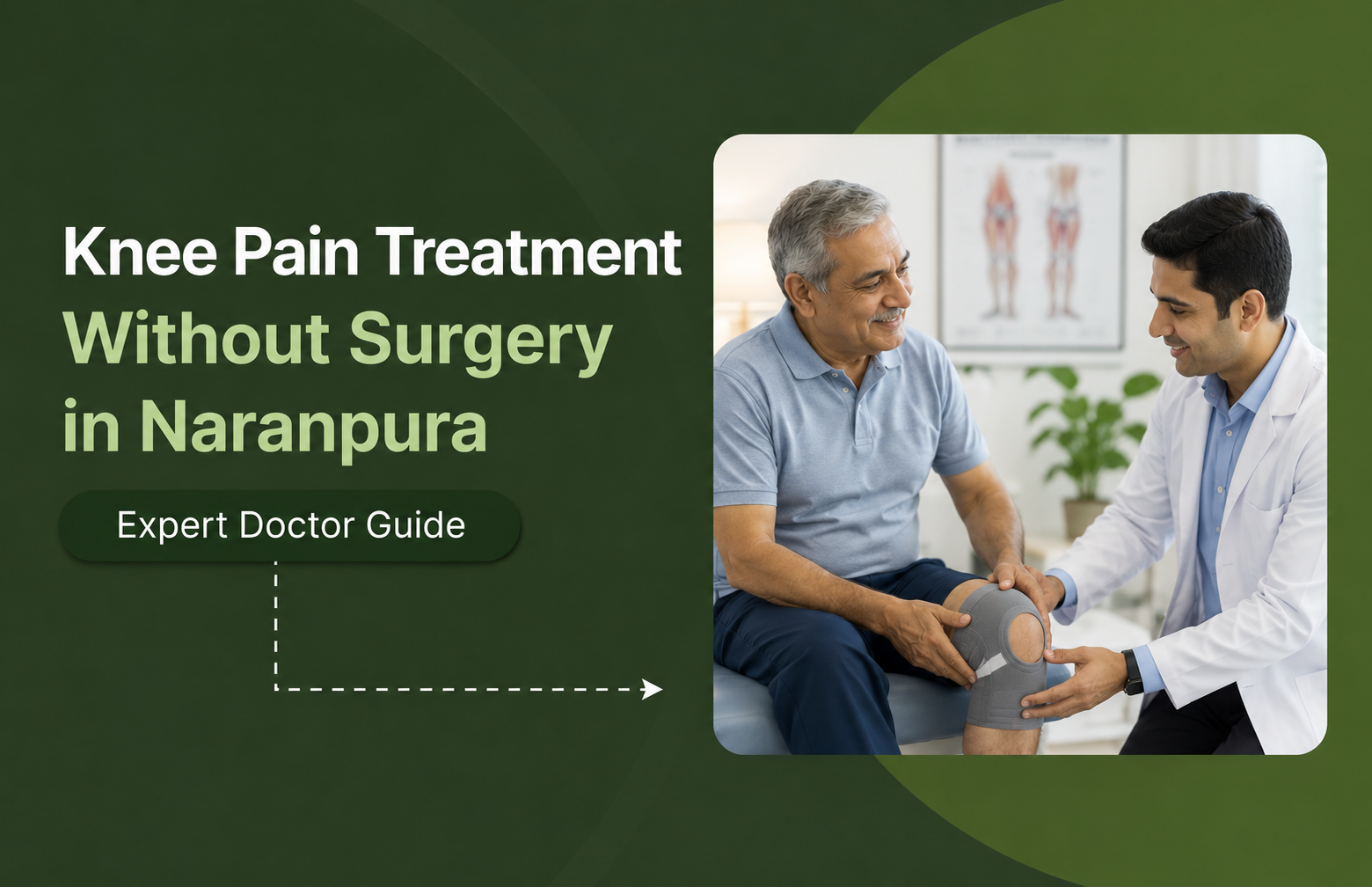
If climbing stairs, sitting cross-legged, or even getting up from a chair makes your knee throb, you’re not alone. Many of our patients searching for Knee Pain Treatment Without Surgery come to us after years of putting up with discomfort, hoping surgery is the only answer. At Anamay Pain Clinic, we believe most knees deserve a chance at non-surgical healing first. Let’s walk through what’s really causing your pain, and what can be done about it without going under the knife.
What Causes Chronic Knee Pain?
Knee pain rarely has just one cause. For many people in their 40s, 50s, and beyond, it’s a combination of wear and tear, weight-bearing strain, and sometimes diabetes-related joint stiffness.
Common reasons we see at Anamay Pain Clinic include osteoarthritis (cartilage breakdown), old sports injuries that never healed properly, ligaments or meniscus tears, and inflammation around the kneecap. If you’ve also been dealing with stiffness in other joints, it’s worth reading about lower back pain exercises, since back and knee issues often go hand in hand.
How Do I Know If I Need Treatment Beyond Painkillers?
If you’ve been relying on over-the-counter painkillers for more than a few weeks, or if your knee swells after activity, it’s time for a proper evaluation. Pain that wakes you up at night, makes your knee feel “locked,” or has reduced your walking distance is a signal that your knee needs more than rest.
A good rule of thumb: if the pain has lasted more than three months despite physiotherapy or medication, it’s time to explore interventional options.
Non-Surgical Treatment Options We Offer
1. Platelet-Rich Plasma (PRP) Therapy
PRP uses a small sample of your own blood, processed to concentrate healing platelets, then injected into your knee joint. It encourages your body’s natural repair process, reducing inflammation and gradually improving joint comfort.
What to expect:
- Most patients with mild to moderate osteoarthritis notice gradual improvement starting 2–6 weeks after injection
- Benefits continue building over 2–3 months
- Typically, 2–3 sessions spaced a few weeks apart
- Strong safety profile since it uses your own blood
2. Genicular Nerve Block + Radiofrequency Ablation (RFA)
This is a precise injection near the small nerves around your knee that carry pain signals to the brain. Done under imaging guidance (ultrasound or fluoroscopy) with a fine needle and local anesthesia, no hospital stay required.
What to expect:
- Diagnostic block: Relief for a few hours to confirm pain source
- Radiofrequency ablation (RFA): For patients who respond well, offers relief lasting several months
- Procedure time: Approximately 30 minutes
- Return to normal activity: Same day
Note: This requires specific interventional training to perform correctly.
3. Viscosupplementation (Joint Lubrication)
If your knee feels “dry” or grinds when moving, viscosupplementation injects a gel-like substance (hyaluronic acid) into the joint to restore natural lubrication.
What to expect:
- Eases friction and makes daily movement smoother
- Particularly effective for early to moderate osteoarthritis
- Duration: Typically, 3–6 months per injection
4. Ozone Therapy
For patients preferring a more natural approach, ozone therapy reduces inflammation and supports healing within the joint. It’s gentle, minimally invasive, and pairs well with physiotherapy.
What Happens During Your First Visit?
We follow a thorough evaluation process:
- Detailed conversation about your pain: when it started, what worsens it, and its impact on daily life
- Physical examination of range of motion, stability, and swelling
- Diagnostic imaging (X-ray or MRI) if needed to confirm the underlying cause
- Personalized treatment plan tailored to your specific condition
Every plan at our clinic is built around your needs, not a one-size-fits-all protocol. We explain each option in plain language, including success rates, risks, and costs, before you decide.
Can Lifestyle Changes Help Alongside Treatment?
Yes, and they matter more than most realize:
| Lifestyle Change | Why It Helps |
|---|---|
| Maintain a Healthy Weight | Reduces pressure on the knee joints significantly. |
| Low-Impact Exercise (Swimming, Stationary Cycling) | Strengthens supporting muscles without straining the knee. |
| Avoid Sitting Cross-Legged or Squatting | Reduces daily strain on the knees, especially in Indian households. |
| Use a Chair Instead of Floor Sitting | Provides immediate relief for irritated knee joints. |
| Take Short Walking Breaks During Long Work Hours | Improves joint mobility and can make a noticeable difference over 3–6 months. |
Why Choose Anamay Pain Clinic?
Choosing the right clinic is just as important as choosing the right treatment. At Anamay Pain Clinic, we focus on accurate diagnosis, evidence-based treatments, and personalized care to help you manage knee pain without surgery.
- Experienced Pain Specialist: Your treatment is led by Dr. Megha Shah (MD, Pain Medicine), who has received advanced training at Tata Memorial Hospital and GCRI.
- Precision-Guided Procedures: All injections and interventional pain procedures are performed under ultrasound or fluoroscopy guidance, ensuring greater accuracy, safety, and avoiding blind injections.
- Personalized Treatment Plans: We create a customized treatment plan based on your condition, symptoms, lifestyle, and treatment goals instead of following a one-size-fits-all approach.
- Comprehensive Follow-Up Care: Regular follow-up visits help us monitor your recovery, assess your progress, and make adjustments to your treatment whenever needed.
- Transparent Consultation: Before beginning treatment, we clearly explain the procedure, expected outcomes, potential risks, and provide a detailed cost estimate so you can make an informed decision.
- Convenient Location: Our clinic is located in Naranpura, Ahmedabad, making it easily accessible for patients from across the city and nearby areas.
- Trusted by Patients: Anamay Pain Clinic is known for compassionate care, evidence-based treatments, and positive patient experiences, helping people return to their daily activities with less pain and better mobility.
Conclusion
Living with knee pain doesn’t mean surgery is your only path forward. With the right combination of PRP, nerve blocks, lubrication therapy, and lifestyle adjustments, many patients in Naranpura and across Ahmedabad have found lasting comfort and improved mobility. If you’re ready to explore non-surgical knee pain management, contact us at Anamay Pain Clinic to schedule a consultation or chat with us on WhatsApp for quick guidance.
Book Your Assessment at Anamay Pain Management Clinic, Ahmedabad
Take the first step towards a pain-free life with expert guidance and advanced regenerative treatments tailored to your condition.
Frequently Asked Questions
Q: Is knee pain treatment without surgery effective for osteoarthritis?
A: Yes. For mild to moderate osteoarthritis, treatments like PRP, viscosupplementation, and genicular nerve blocks can significantly reduce pain and improve mobility, often delaying or avoiding surgery.
Q: How long does relief from a genicular nerve block last?
A: Diagnostic block: a few hours. Radiofrequency ablation: several months.
Q: Are these treatments safe for diabetic patients?
A: Most non-surgical knee treatments are safe for diabetics. Your doctor will review blood sugar control and overall health before recommending injection-based therapy.
Q: How many PRP sessions will I need?
A: Most patients need 2–3 sessions spaced a few weeks apart, depending on joint damage severity.
Q: When should I consider seeing a specialist?
A: If knee pain lasts more than 3 months, disturbs sleep, or limits daily activities despite medication.