

Palliative care is specialized medical care that helps people living with serious illnesses manage pain, control symptoms and improve their quality of life. It supports patients and their families throughout the illness, not only during the final days of life. The 5 stages of palliative care help explain how care needs may change over time, from planning and symptom management to end-of-life support and bereavement. However, every patient’s journey is different, and care should always match their medical condition and personal wishes.
What Is Palliative Care?
Palliative care focuses on improving comfort and quality of life for people living with serious illnesses such as cancer, advanced heart disease, kidney disease and other long-term conditions.
It helps manage physical symptoms as well as emotional, social and psychological concerns. It also supports family members who may find it difficult to manage the illness and daily care needs of their loved one.
For example, a person with cancer may experience severe pain, nausea, fatigue or difficulty sleeping. Palliative care helps address these problems while the patient continues other suitable treatments.
Patients looking for pain relief and supportive medical care can explore the services available at a Pain Management Clinic in Ahmedabad.
Is Palliative Care Only for Patients Near the End of Life?
No. Palliative care can begin soon after the diagnosis of a serious illness. It may be provided alongside treatments such as chemotherapy, radiation therapy or other disease-directed treatment.
Some patients need help managing symptoms early in their illness. Others need more intensive support as their condition changes. The care plan is reviewed according to the patient’s needs.
The main goal is to reduce suffering, maintain dignity and help patients live as comfortably as possible.
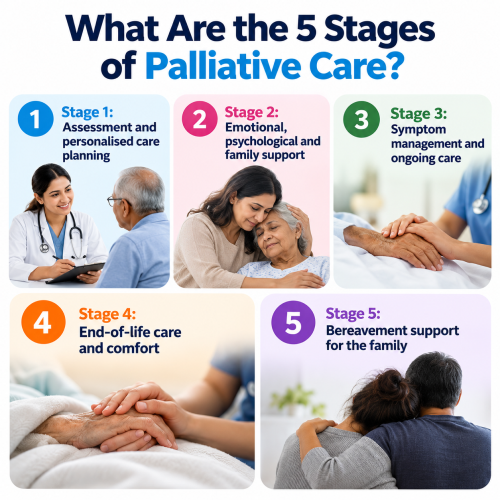
Five Stages of Palliative Care
What Are the 5 Stages of Palliative Care?
The five stages described in this guide are a practical way to understand the different types of support a patient and family may need.
Stage 1: Assessment and Personalised Care Planning
The first stage involves understanding the patient’s medical condition, symptoms, treatment history and personal needs. The doctor also discusses the patient’s concerns, daily activities and goals for care.
A good care plan considers more than the diagnosis. It also looks at how the illness affects the patient’s sleep, movement, appetite, emotional health and ability to manage daily activities.
What Happens During the First Assessment?
The palliative care team may:
- Review the patient’s diagnosis, medical reports and current treatment.
- Assess pain and other symptoms.
- Review current medicines and possible side effects.
- Understand the patient’s emotional and practical needs.
- Discuss treatment goals and personal preferences.
- Explain the support that may be needed at home or in a healthcare setting.
The patient and family can ask questions and share their concerns. This helps the team prepare a care plan that is suitable for the patient’s condition.
Why Is Early Planning Important?
Early planning helps patients and families understand the available options before symptoms become difficult to manage.
It also allows the care team to review medicines, discuss symptom relief and plan for possible changes in the patient’s condition.
Patients and families who want to understand the role of specialist care can read Palliative Care Specialist in Ahmedabad: Essential Guidance.
Stage 2: Emotional, Psychological and Family Support
A serious illness can affect a patient’s emotional well-being as much as their physical health. Patients may feel worried about treatment, concerned about their family or uncertain about what will happen next.
Family members may also experience stress while managing hospital visits, medicines, work and caregiving responsibilities.
Palliative care recognises these concerns as an important part of the patient’s overall well-being.
How Can Emotional Support Help?
Depending on the patient’s needs, support may include:
- Helping patients discuss their fears and concerns.
- Providing counselling or psychological support.
- Helping families understand the illness and care plan.
- Discussing the patient’s personal, cultural and spiritual preferences.
- Guiding caregivers on managing their responsibilities.
- Connecting families with suitable community or social support.
Not every patient needs the same type of emotional support. Some may prefer talking to a counsellor, while others may find comfort in family discussions or spiritual practices.
What Role Does the Family Play?
Family members often help patients follow treatment plans, manage medicines and attend appointments. They may also notice changes in symptoms that need medical attention.
However, caregiving can become physically and emotionally tiring. Families should also ask for help when the responsibilities become difficult to manage.
The guide on supporting someone with Advanced Cancer explains how palliative care can support both patients and caregivers.
Stage 3: Symptom Management and Ongoing Care
Symptom management is a central part of palliative care. The aim is to reduce discomfort, improve daily functioning and help patients maintain the best possible quality of life.
Symptoms can change as an illness progresses or treatment continues. For this reason, the care plan needs regular review.
Which Symptoms Can Palliative Care Manage?
Palliative care may help manage:
- Pain: Cancer pain, nerve pain and other persistent pain.
- Nausea and vomiting: Symptoms related to an illness or its treatment.
- Breathlessness: Difficulty breathing that needs medical assessment and management.
- Fatigue: Tiredness that affects everyday activities.
- Sleep problems: Difficulty sleeping due to pain, anxiety or other symptoms.
- Emotional distress: Worry, fear and sadness related to a serious illness.
The right treatment depends on the cause of the symptom, the patient’s overall health and the medicines they are already taking.
How Is Cancer Pain Managed?
Cancer pain can occur when a tumour presses on nearby tissues, bones or nerves. Pain can also develop because of cancer treatment or other medical problems.
Doctors may use medicines, supportive therapies or selected procedures to manage pain. The choice depends on the type, location and severity of the pain.
For some patients with severe upper abdominal pain related to pancreatic or certain other abdominal cancers, a Celiac Plexus Block may be considered after a detailed assessment. This procedure targets a group of nerves that carry pain signals from organs in the upper abdomen.
Other pain procedures may be appropriate for selected conditions. For example, Radiofrequency Ablation may help manage certain types of chronic pain when the patient meets the clinical criteria. It is not suitable for every type of cancer pain.
Patients should discuss the possible benefits, risks and alternatives of any procedure with their treating specialist.
Why Is Regular Follow-Up Important?
A treatment plan that works well initially may need changes later. The doctor may review pain levels, sleep, appetite, mobility and side effects to understand whether the current approach is helping.
Patients should report new symptoms, worsening pain or medicine-related problems rather than changing their medicines on their own.
Stage 4: End-of-Life Care and Comfort
For some patients, a serious illness may reach a stage where treatment aimed at curing the disease is no longer suitable or no longer matches the patient’s wishes.
At this point, the focus of care may shift more towards comfort, dignity and the patient’s preferred quality of life. Palliative care can provide support during this time.
This stage does not mean that the patient is abandoned or that medical care stops. Pain relief, symptom management and emotional support remain important.
What Does End-of-Life Care Include?
Depending on the patient’s condition and available services, care may include:
- Managing pain and other distressing symptoms.
- Reviewing medicines to support comfort.
- Helping the patient remain as comfortable as possible.
- Supporting personal preferences about care.
- Guiding family members on what changes to expect.
- Discussing care at home, in hospital or in another suitable setting.
The doctor should explain the available options to the patient and family. Decisions should consider the patient’s wishes, medical needs and the support available.
Is End-of-Life Care the Same as Palliative Care?
No. End-of-life care is one part of the broader palliative care approach.
Palliative care can begin much earlier and may continue alongside treatment intended to control or cure an illness. End-of-life care focuses on the needs of patients who are approaching the final phase of life.
The care team should explain these differences clearly so that families can make informed decisions without unnecessary fear or confusion.
Stage 5: Bereavement Support for Family Members
Palliative care also recognizes that family members may need support after the death of a loved one.
Grief affects everyone differently. Some people may feel sadness, anger, guilt or confusion, while others may find it difficult to return to their usual routine. There is no single way to grieve, and the time needed to adjust varies from person to person.
What Can Bereavement Support Include?
Depending on the services available, support may include:
- Counselling or emotional support.
- Guidance on coping with grief.
- Support groups for people who have experienced a loss.
- Help understanding common reactions to bereavement.
- Information about additional mental health support when needed.
Family members should not feel that they must manage grief alone. If sadness, anxiety or difficulty coping becomes overwhelming or continues to affect daily life, speaking with a qualified mental health professional may help.
Bereavement support is an important reminder that compassionate care considers the needs of the family as well as those of the patient.
Do All Patients Go Through the 5 Stages of Palliative Care in Order?
No. The five stages are a guide, not a fixed sequence that every patient follows.
Some patients may remain stable for a long time with appropriate symptom management. Others may experience sudden changes that require an urgent review of their care plan. A patient’s condition may also improve after treatment, allowing the team to adjust the level of support.
Palliative care should respond to what is happening at that time. The aim is to provide the right support according to the patient’s symptoms, medical condition and preferences.
When Should You Consult a Palliative Care Specialist?
Consider speaking with a palliative care specialist when a serious illness causes symptoms or care needs that are difficult to manage.
You may seek advice if:
- Pain continues despite the current treatment plan.
- Side effects interfere with sleep, eating or daily activities.
- Breathlessness, nausea or fatigue affects quality of life.
- The patient or family feels overwhelmed by care decisions.
- Symptoms become more difficult to manage at home.
- You need guidance about comfort-focused care and future planning.
You do not need to wait until the final stage of an illness to ask about palliative care.
At the Palliative Care Clinic in Ahmedabad, patients can discuss their symptoms and explore suitable pain management and palliative care options with the medical team.
You can also learn about the Pain Management & Palliative Care Specialist at Anamay Pain Clinic to understand the doctor’s background and areas of care.
Conclusion
The 5 stages of palliative care help explain how support may change throughout a serious illness. From the first assessment and care planning to symptom management, end-of-life care and bereavement support, the goal is to reduce suffering and protect the patient’s dignity.
However, every patient has different needs. Palliative care should be personalised and reviewed as the condition changes. Patients and families can speak with a qualified palliative care specialist to understand the options available and plan suitable support.
Book Your Consultation with Dr. Megha Shah Today.!
A highly experienced pain specialist providing personalized, advanced, and minimally invasive treatments for long-lasting pain relief and improved quality of life.
Medical research references
The article’s medical explanations are supported by the following resources:
- World Health Organization: Palliative care – explains the role of palliative care in relieving suffering and improving quality of life. – World Health Organization
- National Cancer Institute: Palliative Care in Cancer – explains how palliative care can be provided alongside cancer treatment. – NCI
- Pallium India: Stages of Palliative Care – discusses care planning, emotional support, early care and later – stage needs in the Indian context.
Medical Disclaimer: This article is for general educational purposes only and is not a substitute for professional medical advice, diagnosis or treatment. The stages described are a practical guide and may not apply in the same way to every patient. Consult a qualified healthcare professional for advice about your individual condition and care needs. Do not start, stop or change any medicine or treatment without discussing it with your treating doctor.