
Most cancer patients live with more pain than they need to. Not because good treatment isn’t available, but because pain tends to get treated as an expected part of the disease rather than something worth raising on its own. Patients wait, assume it will pass, or don’t want to add another complaint to an already full conversation with their oncologist.
That hesitation is understandable, but it usually means relief arrives later than it should. At our pain management clinic in Ahmedabad, we see this pattern often: patients who’ve been managing significant pain for weeks or months before anyone suggests palliative care in Ahmedabad as an option specifically for the pain itself.
Why Cancer Pain Management Takes Longer Than It Should
A routine oncology visit is built around monitoring the disease. Scans, blood work, treatment response, and next steps in the protocol take up most of the time available, and pain often gets a brief mention rather than a full conversation.
There’s also a common, quiet assumption that pain is simply part of having cancer, something to tolerate rather than actively treat. Combined with the limited time in a typical appointment, this means pain can go under-discussed for far longer than it should, even when effective treatment for it exists.
A palliative pain specialist exists specifically to close that gap: an appointment where pain is the entire focus, not a few minutes at the end of a longer conversation about something else.
There’s also a practical difference in how the two visits are structured. An oncology follow-up is built around efficiency, moving through scan results, treatment adjustments, and next steps for as many patients as the schedule allows. A pain-focused consultation has room to explore the pain itself in depth: when it started, what triggers it, what’s already been tried, and how it’s affecting sleep, appetite, and mood. That depth of attention is difficult to fit into a standard follow-up, however good your oncology team is.
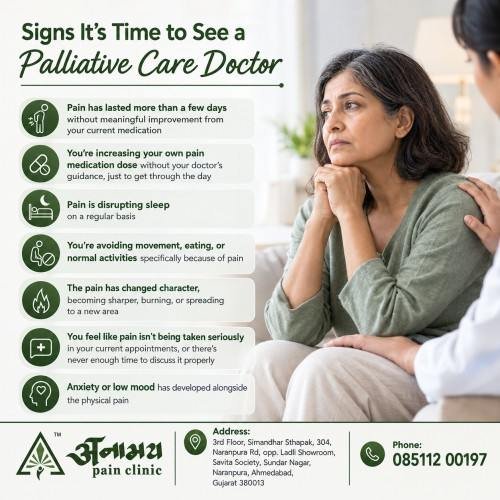
Signs It’s Time to See a Palliative Care Doctor
Not every ache needs a specialist visit, but certain patterns are a clear signal that it’s worth one. Consider a consultation if:
- Pain has lasted more than a few days without meaningful improvement from your current medication
- You’re increasing your own pain medication dose without your doctor’s guidance, just to get through the day
- Pain is disrupting sleep on a regular basis
- You’re avoiding movement, eating, or normal activities specifically because of pain
- The pain has changed character, becoming sharper, burning, or spreading to a new area
- You feel like pain isn’t being taken seriously in your current appointments, or there’s never enough time to discuss it properly
- Anxiety or low mood has developed alongside the physical pain
If two or more of these sound familiar, that’s usually a strong enough signal to book a dedicated pain consultation rather than waiting for your next scheduled oncology visit.
Signs Its Time to See a Palliative Care Doctor
Is This Only for Patients With Stage 4 or Advanced Cancer?
No, and this misconception keeps a lot of patients from seeking help earlier than they need to. Cancer pain specialists see patients at every stage, including those newly diagnosed and still early in treatment. Pain doesn’t wait for a disease to become advanced before it becomes difficult to manage, and neither should the decision to treat it properly.
Some pain comes directly from a tumor pressing on nerves, bones, or organs. Some comes from treatment itself, including surgery, chemotherapy, or radiation. Some appears with no single obvious cause and simply needs to be assessed properly. None of these situations require an advanced-stage diagnosis to justify a specialist visit.
Waiting until pain becomes severe before seeking this kind of help usually makes treatment harder, not easier. Pain that’s caught and addressed early tends to respond better to a wider range of options, while pain left unmanaged for months can become more complex to treat and more disruptive to a patient’s overall recovery and quality of life.
What a Palliative Pain Specialist Can Do Differently
A dedicated pain consultation goes beyond adjusting a medication dose. It typically starts with a detailed history of when the pain started, what it feels like, what makes it better or worse, and how it’s affecting daily life, questions that are hard to cover properly in a short oncology follow-up.
From there, treatment options extend well beyond standard oral medication. Depending on the source and pattern of pain, this can include nerve blocks, targeted interventional procedures, and combination approaches designed specifically for pain that hasn’t responded to a first-line medication plan. The specialist also coordinates directly with your oncologist, so any new treatment fits safely alongside your existing cancer care rather than working around it.
What If My Pain Is Related to Chemotherapy or Treatment Itself?
Pain caused by treatment, rather than the cancer itself, is common and deserves the same attention. Nerve pain, surgical site discomfort, and radiation-related pain all respond to specific management approaches, separate from how tumor-related pain is treated. If your pain started or worsened alongside a chemotherapy cycle, our guide on palliative care during chemotherapy covers that connection in more detail.
What Happens at a Cancer Pain Consultation
A first visit begins with understanding your pain in detail: its location, pattern, intensity, and what’s already been tried. We also review your current cancer treatment and medications so any new plan is coordinated with your oncology team rather than introduced separately.
From there, we build a plan suited to your specific pain pattern, which might include medication changes, an interventional procedure, or a combination of approaches. Follow-up is scheduled based on how you respond, since cancer pain can shift as treatment progresses, and the plan needs to shift with it.
Frequently Asked Questions
Do I need a referral from my oncologist to see a pain specialist?
It helps to keep your oncologist informed, but you can reach out to a palliative pain specialist directly if your pain isn’t well controlled.
Will seeing a pain specialist mean more appointments added to an already full schedule?
Initial visits are usually followed by a lighter follow-up schedule once your pain is better controlled, often coordinated around your existing oncology appointments.
Can pain from cancer surgery or radiation be treated the same way as tumor-related pain?
Not exactly. Treatment-related pain often responds to different approaches than pain caused directly by a tumor, which is why a detailed assessment matters before starting any plan.
Is it too early to see a pain specialist if I was just diagnosed?
No. Pain related to a new diagnosis, upcoming surgery, or early treatment can be addressed from the start rather than waiting until it becomes severe.
What if my pain has been present for a long time and nothing has helped so far?
Long-standing pain can still respond well to a fresh assessment, particularly if it hasn’t been evaluated by a specialist focused specifically on pain rather than the underlying disease.
Conclusion
Cancer pain isn’t something to simply live with until it becomes unbearable. If your pain has lasted more than a few days, disrupted your sleep or daily routine, or never gotten the focused attention it deserves in a busy oncology visit, that’s reason enough to book a dedicated consultation.
You can contact us to schedule a visit, or message us on WhatsApp if you’d like to ask a question first.
This article is for informational purposes only and is not a substitute for professional medical advice, diagnosis, or treatment. Always consult Dr. Megha Shah, your oncologist, or a qualified healthcare provider before making decisions about treatment or care.