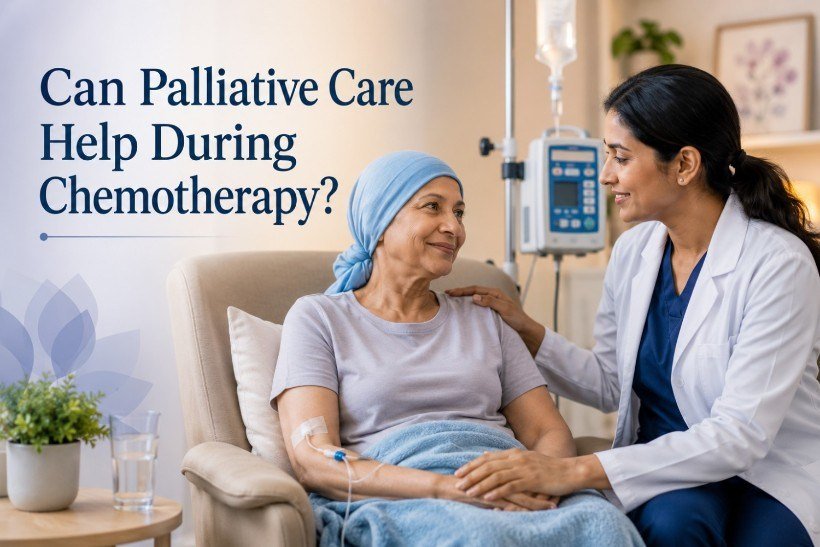
A common assumption trips up a lot of patients starting chemotherapy: that palliative care is something for later, for a stage of illness they haven’t reached yet. That assumption keeps people from getting support that could make the next few months noticeably easier.
Palliative care isn’t reserved for advanced or incurable cancer. It’s available to any patient going through chemotherapy, including those being treated with the full intent to cure the disease. At our pain management clinic in Ahmedabad, we work with chemo patients at every stage, using palliative care in Ahmedabad to manage exactly the kind of side effects chemotherapy is known for.
Common Chemotherapy Side Effects Palliative Care Can Help With
Chemotherapy is effective precisely because it’s aggressive, and that aggressiveness comes with a predictable set of side effects. Palliative care doesn’t treat the cancer itself. It treats what the treatment is doing to your body while it works.
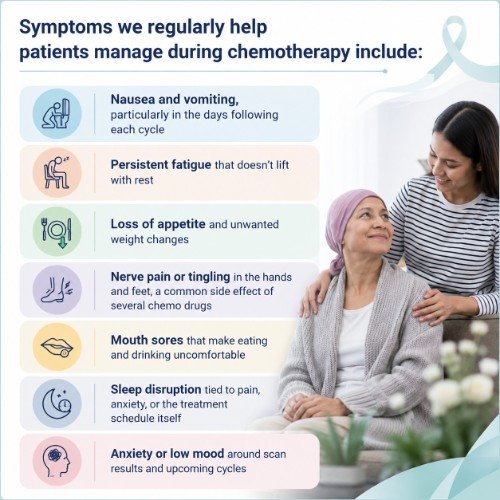
Symptoms we regularly help patients manage during chemotherapy include:
- Nausea and vomiting, particularly in the days following each cycle
- Persistent fatigue that doesn’t lift with rest
- Loss of appetite and unwanted weight changes
- Nerve pain or tingling in the hands and feet, a common side effect of several chemo drugs
- Mouth sores that make eating and drinking uncomfortable
- Sleep disruption tied to pain, anxiety, or the treatment schedule itself
- Anxiety or low mood around scan results and upcoming cycles
None of these are things a patient simply has to push through. Each has management strategies, and starting them early tends to work better than waiting until a symptom becomes severe enough to disrupt the next cycle.
Not every patient experiences every symptom, and severity varies with the specific drugs used, the number of cycles, and individual health factors. A palliative consultation isn’t about assuming the worst-case side effect profile — it’s about being ready to respond to whichever symptoms actually show up, and adjusting as your body’s response becomes clearer over the first few cycles.
Common Chemotherapy Side Effects Palliative Care
Does This Mean My Cancer Is Advanced or Incurable?
No. This is worth stating plainly, because the mix-up is common and it’s an unnecessary source of fear at an already difficult time.
Palliative care and curative treatment aren’t opposites. A patient can be receiving chemotherapy with a full expectation of remission while also receiving palliative support to manage nausea, fatigue, or nerve pain along the way. The two run in parallel. One is aimed at the cancer. The other is aimed at helping you get through treatment with less physical and emotional strain.
Confusion often comes from the term “palliative chemotherapy,” which refers to chemo given specifically to relieve symptoms when a cure isn’t the goal. That’s a different situation altogether from using palliative care to support a patient through curative chemotherapy, which is what most patients asking this question are actually dealing with.
How a Palliative Care Plan Works Alongside Chemotherapy
A palliative care plan during chemotherapy is built around your treatment calendar, not separate from it. Before your first cycle or at any point during treatment, a consultation looks at which symptoms are affecting you most and adjusts medication and supportive measures accordingly.
This might include anti-nausea medication timed around your infusion schedule, targeted pain management for nerve-related discomfort, dietary guidance for appetite changes, or simple adjustments to your sleep and activity routine. As your treatment progresses and side effects shift, the plan shifts with it, rather than staying fixed from the first visit.
Coordination with your oncologist remains central throughout. A palliative specialist reviews your chemotherapy protocol so any additional medication or intervention works safely alongside it, without interacting poorly with the drugs already in your treatment plan.
Some patients only need support around the toughest few days after each infusion. Others benefit from a more continuous plan through the full course of treatment. The plan is meant to fit your specific side effects, not a generic template applied to every chemo patient regardless of what they’re actually experiencing.
What About Patients With More Advanced Cancer?
Everything above applies whether chemotherapy is being given with curative intent or as part of managing more advanced disease. If your situation involves an advanced or stage 4 diagnosis, the same supportive approach applies, though the focus often shifts further toward comfort and quality of life alongside treatment. Our guide on palliative care for advanced cancer covers that stage of care in more detail, including how families are typically involved.
A Note for Family Members
Watching someone go through chemotherapy is its own kind of difficult, particularly when side effects make ordinary days harder than expected. Families often want to help but aren’t sure what’s normal, what needs medical attention, and what can wait until the next scheduled visit.
Part of a palliative consultation includes giving family members practical guidance: which symptoms to monitor at home, when to call the care team rather than wait, and how to support a patient’s appetite, rest, and mood through a demanding treatment schedule. You don’t need to manage this guesswork alone.
It’s also common for caregivers to feel like they should already know how to handle this, especially if they’ve supported a family member through illness before. Chemotherapy side effects don’t always follow the same pattern from one patient or one cancer type to the next, so it’s reasonable to ask for clear, specific guidance rather than relying on general assumptions about what recovery after a chemo cycle should look like.
What Does a Consultation Involve?
A first visit typically starts with a review of your chemotherapy regimen and a conversation about which side effects have been the hardest to manage so far. From there, we build a plan that fits around your existing cycle schedule, adjusting medication or introducing supportive measures where needed.
Follow-up is usually timed around your chemotherapy cycles, since side effects tend to follow a pattern from one round to the next. This makes it easier to anticipate a difficult few days after a cycle and manage it proactively rather than reactively.
Book Your Consultation with Dr. Megha Shah Today.!
Meet Dr. Megha Shah at Anamay Pain Clinic, one of the leading pain management clinics in Ahmedabad. A highly experienced pain specialist providing personalized, advanced, and minimally invasive treatments for long-lasting pain relief and improved quality of life.
Frequently Asked Questions
Will palliative care interfere with my chemotherapy? No. Palliative care works alongside your oncology team’s treatment plan and is coordinated to avoid any conflict with your chemotherapy protocol.
Do I need a referral from my oncologist to see a palliative care specialist? It helps to loop your oncologist in, but you can reach out to a palliative care specialist directly if chemotherapy side effects are affecting your daily life.
Is this only for patients whose cancer isn’t curable? No. Palliative support during chemotherapy is available to patients being treated with curative intent as well as those managing more advanced disease.
Can nerve pain from chemotherapy actually be treated? Often, yes, through a combination of medication and targeted interventions, depending on how the nerve pain presents and how it’s affecting you.
How soon can I start palliative support after beginning chemotherapy? There’s no waiting period. Support can begin as soon as symptoms start affecting you, even after your very first cycle.
Conclusion
Chemotherapy is demanding enough without treating its side effects as something to simply endure. Whether you’re being treated for a cure or managing more advanced disease, palliative support can run alongside your chemotherapy from the very first cycle.
If nausea, fatigue, pain, or any other side effect is making treatment harder than it needs to be, you can contact us to arrange a consultation, or message us on WhatsApp to ask a quick question first.
This article is for informational purposes only and is not a substitute for professional medical advice, diagnosis, or treatment. Always consult Dr. Megha Shah, your oncologist, or a qualified healthcare provider before making decisions about treatment or care.