

Hearing that a loved one’s cancer is advanced or at stage 4 is one of the hardest moments a family can go through. In the days that follow, most of the questions aren’t really about statistics or treatment protocols. They’re closer to home: How much pain will there be? Can we manage this at home? What do we do differently start now?
This is where a dedicated palliative approach matters most. At our pain management clinic in Ahmedabad, we work with families at exactly this stage, focusing less on what the illness will do and more on what can be done, right now, to keep the person comfortable through palliative care in Ahmedabad.
What “Advanced” Actually Means for Day-to-Day Care
Advanced or stage 4 cancer means the disease has spread beyond its original site. Medically, that’s an important detail for your oncology team’s treatment planning. For day-to-day life, though, it usually means something more practical: symptoms tend to become more frequent, pain patterns shift, and the family’s role in daily care grows.
This is not a switch that turns off active treatment. Many patients at this stage continue chemotherapy, targeted therapy, or radiation, while palliative support runs alongside it to manage what the disease and treatment are doing to the body day to day. The two aren’t in competition. One is aimed at the disease. The other is aimed at how the person feels while living with it.
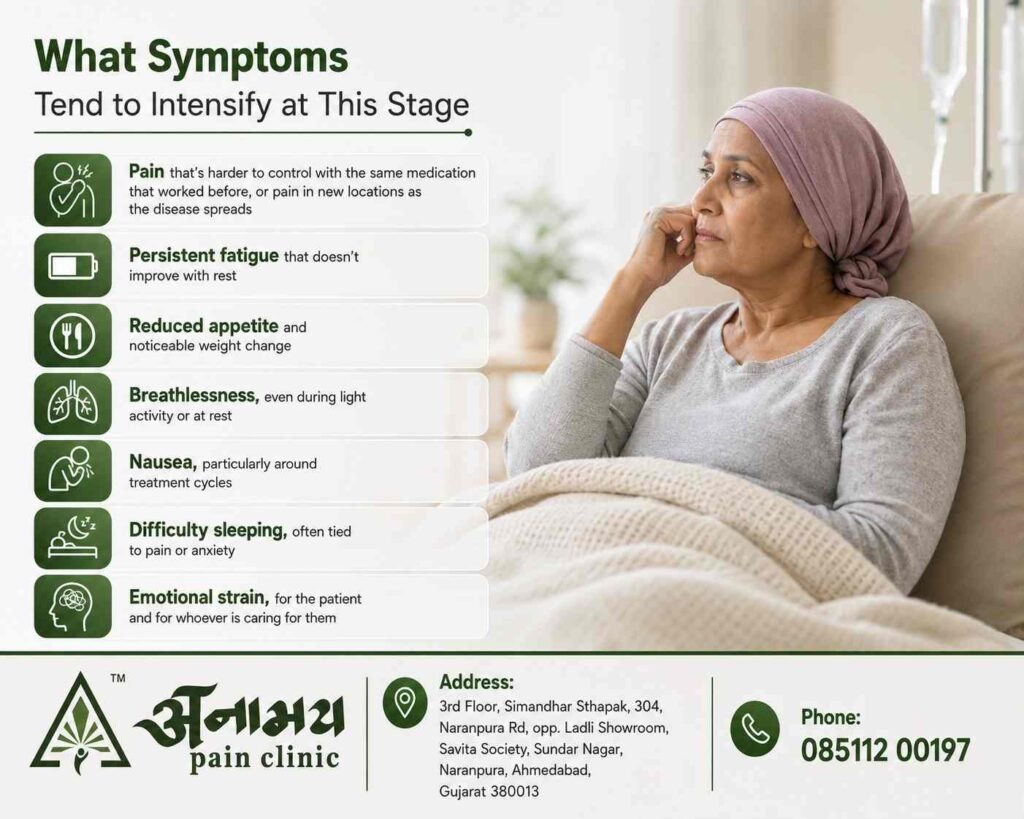
What Symptoms Tend to Intensify at This Stage
Every cancer and every patient behave differently, but families at this stage commonly describe a cluster of changes worth watching for and discussing early with a palliative specialist:
- Pain that’s harder to control with the same medication that worked before, or pain in new locations as the disease spreads
- Persistent fatigue that doesn’t improve with rest
- Reduced appetite and noticeable weight change
- Breathlessness, even during light activity or at rest
- Nausea, particularly around treatment cycles
- Difficulty sleeping, often tied to pain or anxiety
- Emotional strain, for the patient and for whoever is caring for them
None of these need to be accepted as simply part of the illness. Each one has management options and addressing them earlier tends to be more effective than waiting until they become severe.
Palliative Care for Advanced Cancer
How the Care Plan Shifts at an Advanced Stage
A palliative plan at this stage looks different from one made at diagnosis. Pain management often becomes more central, sometimes involving interventional procedures for pain that oral medication alone can’t fully control. Symptom monitoring tends to happen more frequently, since changes can occur faster than in earlier stages.
Coordination with your oncology team also becomes more important, not less. A palliative specialist reviews what treatments and medications are already in place so that new plans work with your existing care rather than around it. For patients managing this alongside cancer treatment, our detailed guidance on palliative care for cancer patients covers how these two tracks work together in more depth, including how palliative care differs from hospice care for families weighing that question.
Home-based support often becomes a bigger part of the conversation at this stage too. Not every visit needs to happen at a clinic. Medication schedules, symptom check-ins, and family guidance can often be coordinated so a patient isn’t making frequent, exhausting trips just to stay on top of their care.
What This Means for Family Caregivers
Advanced cancer changes daily life for the whole household, not just the patient. Families often find themselves managing medication schedules, tracking symptoms, coordinating between doctors, and making decisions under pressure, often without much guidance on how to do it well.
A good palliative team treats this as part of the job, not an afterthought. That includes:
- Clear, honest explanations of what to expect and what to watch for
- Practical guidance on managing medications and symptoms at home
- A direct line to the care team when something changes unexpectedly
- Emotional support for caregivers themselves, who are often stretched thin
Caregiver burnout is real and common. Asking for this kind of support isn’t a sign that you’re struggling to cope. It’s a normal part of managing a serious illness well over time.
Does Choosing Palliative Care at This Stage Mean Giving Up?
No. This question comes up often, and it’s worth answering directly. Choosing to prioritize comfort alongside ongoing treatment isn’t a decision to stop fighting the disease. It’s a decision to make sure pain, breathlessness, fatigue, and emotional distress don’t have to be endured silently while that treatment continues.
Some families do reach a point, often later, where curative treatment is no longer the goal and comfort become the primary focus. That’s a separate and later conversation, and it happens gradually, in discussion with your full care team, not as an automatic next step simply because the cancer is advanced.
A Note from Dr. Megha Shah’s Practice
Dr. Megha Shah trained in pain and palliative medicine at Tata Memorial Hospital, Mumbai, and Gujarat Cancer Research Institute, Ahmedabad, working specifically with patients navigating advanced cancer pain and symptoms. That background shapes how consultations at Anamay Pain Clinic in Naranpura are structured: a detailed review of current symptoms and treatment, an honest conversation about what’s realistic, and a plan that adjusts as things change, rather than staying fixed once it’s written.
Families are included in this process from the first visit. Advanced cancer rarely affects just one person, and care plans work better when the people supporting the patient day to day understand what’s happening and why.
Conclusion
An advanced cancer diagnosis changes a great deal, but it doesn’t mean comfort has to take a back seat to everything else. Pain, breathlessness, fatigue, and the emotional weight these places on a family are all things a palliative care plan is built to address, alongside whatever treatment path you and your oncologist have chosen.
If a loved one’s symptoms are becoming harder to manage, or your family simply needs clearer guidance on what to do next, you can contact us to arrange a consultation, or message us on WhatsApp if that’s an easier first step.
Book Your Consultation with Dr. Megha Shah Today.!
Meet Dr. Megha Shah at Anamay Pain Clinic, one of the leading pain management clinics in Ahmedabad. A highly experienced pain specialist providing personalized, advanced, and minimally invasive treatments for long-lasting pain relief and improved quality of life.
Frequently Asked Questions
Does starting palliative care at an advanced stage mean treatment has stopped?
No. Palliative care commonly runs alongside ongoing chemotherapy, radiation, or targeted therapy. It addresses comfort and symptoms while disease-directed treatment continues.
Can advanced cancer pain be managed without high doses of opioids?
Often, yes, through a combination of carefully adjusted medication, interventional procedures like nerve blocks, and non-drug approaches. The right combination depends on where the pain is coming from and how the patient responds.
Is home-based palliative care realistic for advanced cancer patients in Ahmedabad?
Many aspects, including medication management and symptom check-ins, can be coordinated for home settings, particularly for patients who find frequent clinic visits difficult or exhausting.
How do we know when it’s time to bring in a palliative care specialist?
If pain, breathlessness, fatigue, or other symptoms are becoming harder to manage with your current plan, or if caregiving at home is starting to feel overwhelming, that’s a reasonable time to ask your oncologist for a palliative referral or reach out directly.
Will a palliative care doctor take over from our oncologist?
No. A palliative specialist works alongside your oncology team, not in place of it, focusing specifically on symptom relief and quality of life while cancer treatment continues under your oncologist’s direction.
This article is for informational purposes only and is not a substitute for professional medical advice, diagnosis, or treatment. Always consult Dr. Megha Shah, your oncologst, or a qualified healthcare provider before making decisions about treatment or care.