
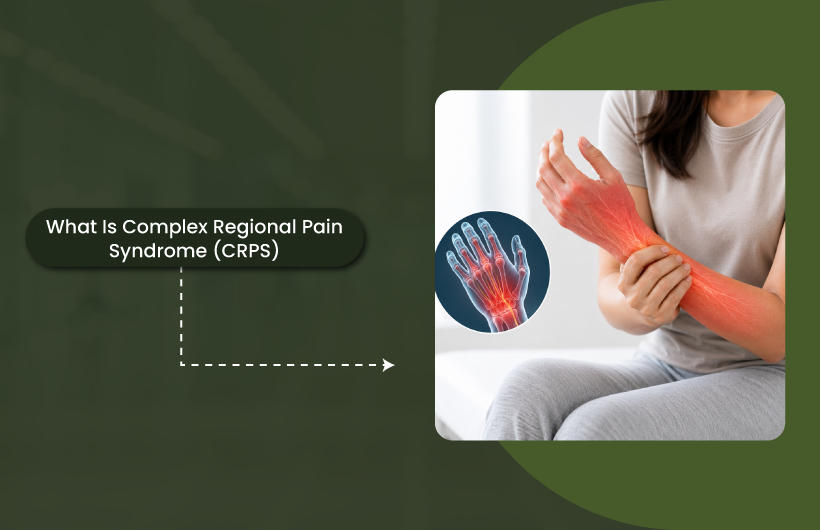
Persistent burning pain in an arm or leg that doesn’t fade after an injury has healed? It might not be ordinary nerve sensitivity. For some patients, it’s complex regional pain syndrome, or CRPS — a condition that’s easy to overlook because it rarely shows up clearly on a scan.
If you’ve been searching for a CRPS pain specialist in Ahmedabad, you probably already know how hard it can be to get a straight answer.
Many patients spend months moving between doctors before anyone names what’s actually happening to them. At Anamay Pain Clinic, we see this pattern often enough that we wanted to explain, in plain terms, what CRPS is, why it’s missed, and what treatment actually looks like.
What Is CRPS?
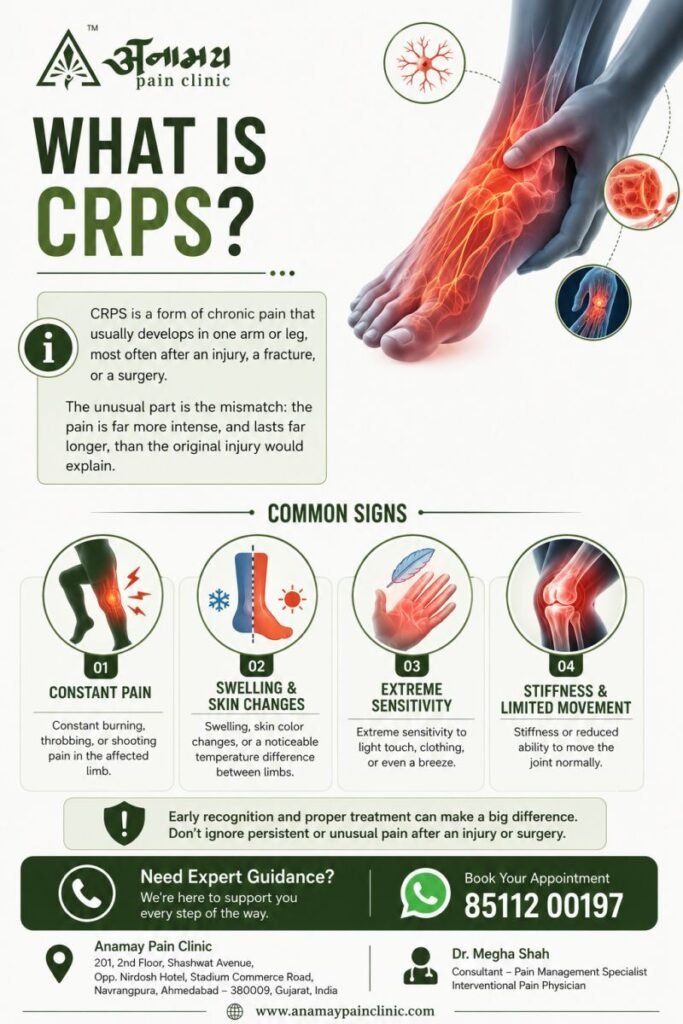
CRPS is a form of chronic pain that usually develops in one arm or leg, most often after an injury, a fracture, or a surgery. The unusual part is the mismatch: the pain is far more intense, and lasts far longer, than the original injury would explain.
Common signs include:
- Constant burning, throbbing, or shooting pain in the affected limb
- Swelling, skin color changes, or a noticeable temperature difference between limbs
- Extreme sensitivity to light touch, clothing, or even a breeze
- Stiffness or reduced ability to move the joint normally
Symptoms vary a lot from person to person, which is part of why CRPS is confusing for both patients and doctors trying to pin it down.
CRPS is also more common than most patients expect. It tends to show up more often in women than men, and typically appears after fractures, sprains, or surgeries on a hand, wrist, foot, or ankle — though it can follow almost any injury to a limb. Symptoms usually begin within weeks of the original injury, not months, which is another reason it’s often missed: patients and doctors alike expect post-injury pain to fade on a predictable timeline, and CRPS doesn’t follow that pattern.
Complex Regional Pain Syndrome (CRPS)
Why CRPS Gets Missed or Misdiagnosed
There’s no single blood test or scan that confirms CRPS. Diagnosis relies on a detailed history and physical exam, which takes time most general physicians don’t have during a short consultation.
Because the pain looks “out of proportion” to the injury, patients are sometimes told it’s psychological, or that they simply need to wait it out. That advice is well-meaning but can delay treatment during the window when it works best — similar to how sciatica pain is often dismissed as ordinary back strain until it’s been present for months.
Early diagnosis matters. Patients who start treatment within the first few months of symptoms generally respond better than those who are diagnosed a year or more later. If pain in a limb has outlasted its original injury by weeks, it’s worth asking specifically about CRPS rather than accepting “it’s just taking time to heal.”
How Is CRPS Treated at Anamay Pain Clinic?
Dr.Megha Shah approaches CRPS the way she approaches most chronic pain conditions — through image-guided, minimally invasive techniques rather than defaulting to long-term medication or surgery.
Depending on how long the condition has been present and which limb is affected, treatment may include:
- Nerve blocks to interrupt the pain signal at its source and confirm the diagnosis
- Physical and movement therapy, since gentle, guided movement of the affected limb is part of recovery, even though it feels counterintuitive
- Spinal cord stimulation for patients whose pain hasn’t responded to nerve blocks or medication alone
- Medication management, used to support the above rather than as the only strategy
Every plan starts with a detailed consultation and, where needed, imaging to rule out other causes. There’s no single fix that works for every patient, and Dr. Megha Shah is upfront about that from the first visit — a big part of what a pain management specialist actually does day to day is exactly this kind of individualized planning, rather than handing out a standard protocol.
What Results Can You Expect?
Some patients notice a meaningful drop in pain within days of a nerve block, especially if CRPS was caught early. Others, particularly those diagnosed later, need a longer combination of therapies before they see real change.
CRPS can also go into remission on its own in some people, while others need ongoing management for longer. Being honest about this range matters more than promising a fixed timeline — chronic pain conditions rarely follow a single script, and a doctor who’s honest about the variation is easier to trust than one who oversells a single visit.
What tends to hold true across cases: waiting longer to seek treatment tends to make recovery slower, not faster.
It also helps to set realistic expectations about what “recovery” means. For many patients, success isn’t a single dramatic before-and-after — it’s a gradual return to using the limb normally, sleeping through the night without pain waking them, and being able to wear regular clothing or shoes again without the skin reacting to light contact. Tracking small wins like these, rather than expecting the pain to disappear overnight, tends to keep patients from getting discouraged partway through treatment.
Conclusion
CRPS is uncommon enough that many doctors see only a handful of cases in their career, which is exactly why it gets missed. If a limb injury has left you with pain that seems disproportionate, hasn’t faded on its own schedule, or comes with swelling and skin changes that don’t add up, it’s worth getting evaluated specifically for CRPS rather than waiting it out.
Dr. Megha Shah has treated CRPS alongside a wide range of chronic pain conditions using non-surgical, image-guided techniques. If this sounds like what you or a family member has been dealing with, contact us to schedule an evaluation.
This article is for informational purposes only and is not a substitute for professional medical advice, diagnosis, or treatment. Always consult Dr. Megha Shah or a qualified healthcare provider before starting any treatment.
Book Your Assessment at Anamay Pain Management Clinic, Ahmedabad
Take the first step towards a pain-free life with expert guidance and advanced regenerative treatments tailored to your condition.
Frequently Asked Questions
Is CRPS the same as regular nerve pain?
No. CRPS involves a wider set of symptoms — swelling, skin and temperature changes, and extreme sensitivity — not just nerve-type burning or tingling.
Can CRPS happen without any injury?
It’s uncommon, but a small number of patients develop CRPS without a clear preceding injury or surgery.
Does CRPS always affect the same limb permanently?
Most commonly, yes, but symptoms can occasionally spread to other areas over time, which is another reason early evaluation matters.
Is surgery ever needed for CRPS?
Surgery is rarely the first option and can sometimes worsen CRPS if performed on the affected limb without careful planning. Non-surgical, image-guided treatment is usually tried first.
How long does treatment usually take?
It depends heavily on how early CRPS is caught. Some patients respond within weeks of starting nerve blocks; others need several months of combined therapy.
Will CRPS come back after it’s treated?
It can, particularly after a new injury or a period of high stress. Patients who’ve had CRPS once are usually advised to flag it immediately to any doctor treating a future limb injury.
Disclaimer:This article is for informational purposes only and is not a substitute for professional medical advice, diagnosis, or treatment. Always consult Dr. Megha Shah or a qualified healthcare provider before starting any treatment.