

Persistent joint, muscle, or spine pain can make everyday activities difficult and affect overall quality of life. When facing ongoing discomfort, many people wonder whether they should consult an orthopaedic doctor or a pain management specialist. Although both professionals help treat pain-related conditions, their treatment approaches and areas of expertise are different. Understanding the difference between these specialists can help patients choose the right type of care for their specific condition.
A specialized Pain Management Clinic in Ahmedabad focuses on diagnosing the underlying cause of chronic pain and providing targeted treatments to reduce discomfort. Pain management specialists often use advanced, minimally invasive therapies that aim to control pain, improve mobility, and help patients return to their normal activities without relying on surgical procedures.
What Is the Difference Between an Orthopedic and Pain Management Doctor?
The main Orthopedic and Pain Doctor Difference lies in their treatment approach and area of expertise.
An orthopedic doctor focuses on identifying and managing problems affecting bones, joints, muscles, and connective tissues. This includes bones, joints, ligaments, tendons, and muscles. Orthopedic doctors often treat fractures, sports injuries, arthritis, and joint problems, and they may recommend surgical procedures when structural damage is present.
On the other hand, a Pain Management Doctor focuses specifically on diagnosing and treating chronic pain. Instead of surgery, they usually use non-surgical treatments such as injections, nerve blocks, medications, and rehabilitation programs to relieve pain and improve function.
Key Differences
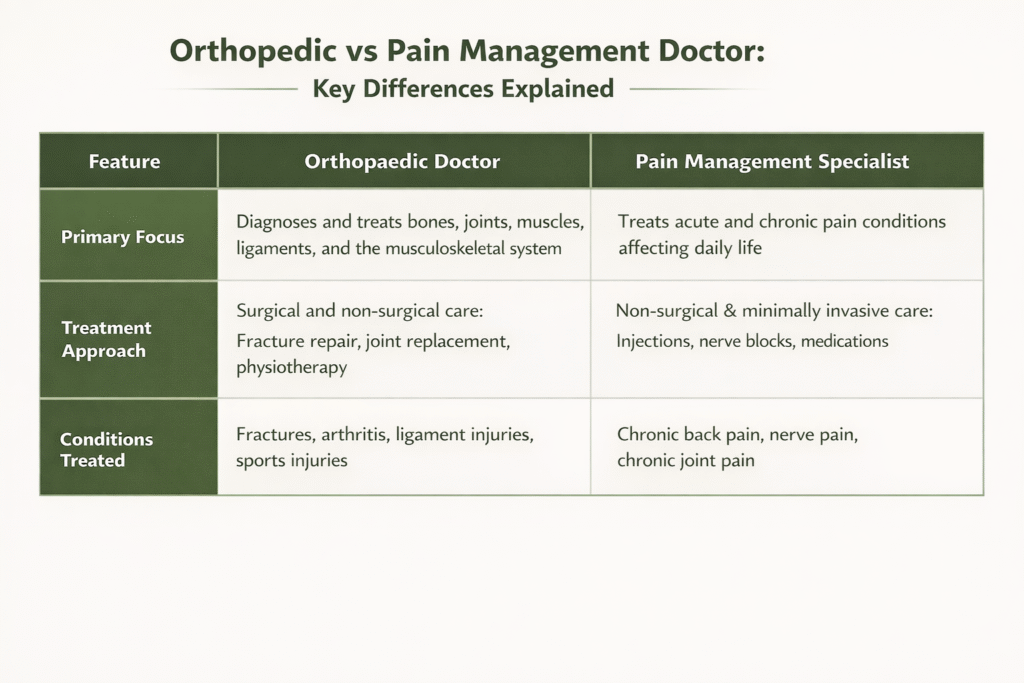 In simple terms, orthopedic doctors fix structural problems in the body, while pain management specialists focus on controlling and reducing pain.
At Anamay Pain Clinic, Dr. Megha Shah helps patients manage chronic pain through advanced non-surgical procedures, making it easier to return to daily activities without major surgery.
What Does a Pain Management Doctor Do?
The role of a pain management specialist is to diagnose and treat different types of chronic and persistent pain that affect daily activities and overall well-being. These doctors are trained to understand the complex nature of pain and manage conditions that last longer than three months.
Through detailed evaluation and advanced treatment approaches, pain management specialists create personalised treatment plans that focus on addressing the root cause of pain. Their aim is not only to reduce discomfort but also to improve mobility, enhance physical function, and help patients regain a better quality of life.
Frequent Pain Issues Addressed by a Pain Management Specialist
Pain management doctors treat a wide variety of conditions, including:
- Chronic back and neck pain
- Sciatica and nerve compression
- Arthritis and joint pain
- Herniated or slipped discs
- Migraine and nerve-related pain
- Post-surgery pain
- Cancer-related pain
These specialists use advanced diagnostic techniques and modern treatments to help patients manage pain effectively.
Treatments Used in Pain Management
Pain management specialists use a variety of minimally invasive techniques to relieve pain, including:
- Epidural steroid injections
- Facet joint injections
- Nerve blocks
- Radiofrequency ablation
- Spinal cord stimulation
- Medication management
- Physical therapy coordination
These procedures aim to reduce inflammation, block pain signals, and improve movement without major surgery.
At Anamay Pain Clinic, Dr. Megha Shah focuses on modern interventional pain treatments that help patients avoid unnecessary surgical procedures whenever possible.
When Should You See an Orthopedic Doctor or a Pain Management Specialist?
Knowing when to consult the right doctor can help you receive timely and effective treatment.
It is advisable to see an orthopedic specialist when you notice any of the following signs:
- Bone fractures or traumatic injuries
- Ligament or tendon tears
- Severe joint damage
- Sports injuries
- Conditions requiring surgery, such as joint replacement
Orthopedic doctors use imaging tests such as X-rays, MRI, and CT scans to diagnose structural problems in bones and joints.
If surgery is required to repair damaged joints or bones, an orthopedic surgeon performs the procedure.
When to See a Pain Management Specialist
A Pain Management Specialist is the right choice if:
- Pain lasts for more than three months
- Pain interferes with daily activities
- Pain persists despite medications or physiotherapy
- Surgery is not the best option
- Even after surgery pain continues
Pain management specialists focus on identifying the root cause of persistent pain and providing long-term relief through minimally invasive treatments and personalised care plans. The Pain Specialist Diagnosis process typically includes a detailed medical history review, physical examination, and advanced diagnostic techniques to accurately understand the patient’s condition.
After a thorough evaluation, a customised treatment plan is created to help control pain, improve mobility, and enhance overall quality of life.
Can Orthopedic Doctors and Pain Specialists Work Together?
Yes, many patients benefit from a combined approach where orthopedic doctors and pain management specialists work together.
For example:
- An orthopedic surgeon may diagnose a spinal condition.
- A pain management specialist may provide injections or nerve treatments to control pain.
- Physiotherapy supports the recovery of movement and muscle strength.
This collaborative treatment approach ensures that patients receive comprehensive care.
In many cases, patients prefer to try pain management treatments before considering surgery. Minimally invasive procedures can provide significant relief and may delay or even eliminate the need for surgery.
Why Choosing the Right Pain Expert Matters
Choosing the right specialist can make a significant difference in recovery and long-term health. Some conditions require surgical treatment, while others respond well to pain management therapies.
Pain management specialists focus on:
- Accurate diagnosis of pain sources
- Non-surgical treatment options
- Long-term pain control
- Improving daily function and mobility
At Anamay Pain Clinic, patients receive advanced interventional pain treatments under the care of Dr. Megha Shah, who specialises in diagnosing and treating complex pain conditions with a patient-centered approach.
Conclusion
Understanding the difference between an Orthopedic vs Pain Management Doctor helps patients make better treatment decisions. Orthopedic doctors specialize in diagnosing and surgically treating bone and joint conditions, while pain management specialists focus on reducing chronic pain through minimally invasive procedures.
If your pain is related to injury or structural damage, an orthopedic doctor may be the right choice. However, if you are struggling with long-lasting pain that affects your daily life, consulting a Pain Management Specialist can provide effective non-surgical relief.
At Anamay Pain Clinic, Dr. Megha Shah offers advanced pain management solutions designed to help patients regain comfort, mobility, and a better quality of life.