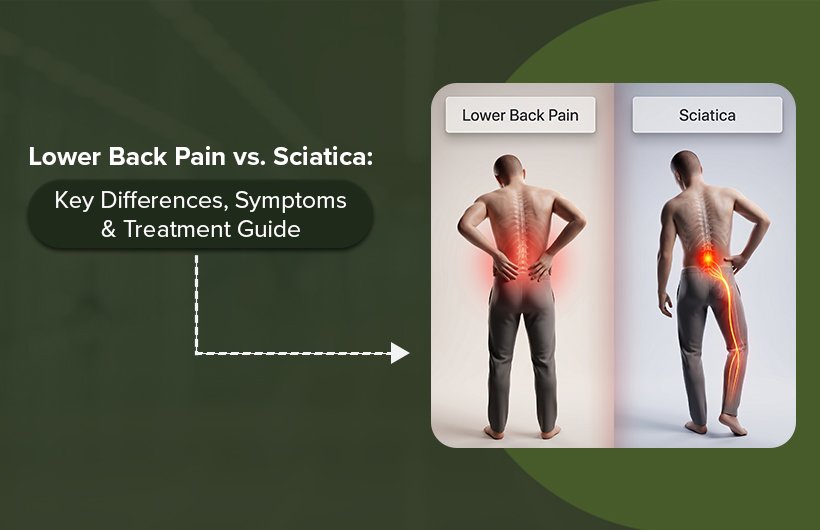
Identifying the root cause of spinal discomfort is the most critical step in achieving long-term relief and effective recovery. While these terms are often used interchangeably, understanding the distinction between Lower Back Pain vs. Sciatica is vital; a treatment plan designed for a pulled muscle might not address the complexities of a compressed nerve.
At a leading pain management clinic in Ahmedabad, specialists emphasize that an accurate diagnosis is the foundation of any successful intervention. This guide breaks down the specific indicators—from pain location to unique triggers—to help you identify your symptoms and seek the specialized care you need to regain your mobility.
What Is Lower Back Pain?
Lower back pain (LBP) is a localized discomfort occurring in the lumbar region. It is typically musculoskeletal, meaning it stems from the muscles, ligaments, or joints of the spine. Whether it’s a dull ache after a long day at a desk or a sharp “tweak” from lifting a heavy box, the pain is generally contained within the back itself.
What Is Sciatica?
Sciatica pain is a clinical symptom of an underlying condition—such as a herniated disc or spinal stenosis—that irritates or compresses the sciatic nerve. Because this is the largest nerve in the body, the pain isn’t just felt in the back; it follows the nerve’s long pathway down the leg.
Key Differences Between Lower Back Pain and Sciatica
To better understand what you are e xperiencing, let’s look at the specific characteristics of each condition.
Pain Location
- Lower Back Pain: Centered in the “small” of the back. It may spread across the top of the hips but rarely travels below the buttocks.
- Sciatica: While it may start in the back, the primary “hot spot” is often the buttock, the back of the thigh, and frequently into the calf or foot.
Types of Pain
- Lower Back Pain: Usually described as a dull, heavy ache, soreness, or stiffness. It can feel like a “tight knot” in the muscle.
- Sciatica: Often described as searing, sharp, or like an electric shock. It is a distinct “nerve pain” that feels much more intense than a standard muscle ache.
Radiation of Pain
- Lower Back Pain: Non-radiating. The pain stays where the injury is.
- Sciatica: Characterized by radiculopathy. The pain “travels” or shoots along the nerve branch, moving from the spine down to the lower extremities.
Triggers and Movements
- Lower Back Pain: Often triggered by bending, twisting, or lifting. It usually feels better when you find a comfortable resting position.
- Sciatica: Triggered by prolonged sitting, sneezing, or coughing. Even a simple movement like straightening your leg while sitting can cause a sharp “zing” down the nerve.
Neurological Symptoms
- Lower Back Pain: Rarely involves neurological changes.
- Sciatica: Frequently accompanied by numbness, tingling (“pins and needles”), or muscle weakness in the affected leg.
Key Symptoms
Lower Back Pain
- Muscle Spasms: Intense, localized cramping in the back.
- Stiffness: Difficulty bending over or transitioning from sitting to standing.
- Tenderness: The muscles flanking the spine may feel sore to the touch.
- Limited Range: Pain that worsens when twisting or lifting but stays “contained” in the back.
Sciatica
- The “Travel” Factor: Pain follows the path of the sciatic nerve (the longest nerve in your body).
- Unilateral Pain: It almost always affects only one leg.
- Positional Discomfort: Often feels worse when sitting for long periods or during sudden movements like coughing.
- Foot/Toe Issues: In severe cases, it can cause “foot drop” or difficulty lifting the front part of the foot.
Common Causes
Causes of Lower Back Pain
Most back pain is mechanical, meaning it involves the physical structure of the spine and supporting tissues:
- Muscle Strain: Overstretching or tearing ligaments/muscles (common after heavy lifting).
- Degenerative Disc Disease: Normal wear and tear as we age, causing discs to lose their cushioning.
- Facet Joint Pain: Inflammation in the small joints that link the vertebrae together.
- Poor Posture: Long-term strain from “slumping” at a desk or looking down at devices.
Causes of Sciatica
Sciatica occurs when the sciatic nerve is compressed or pinched:
- Herniated Disc: The “jelly” inside a spinal disc leaks out and irritates the nearby nerve root.
- Spinal Stenosis: A narrowing of the spaces within your spine, which puts pressure on the nerves.
- Spondylolisthesis: When one vertebra slips forward over another, pinching the nerve.
- Piriformis Syndrome: A small muscle in the buttock (the piriformis) becomes tight or spasms, compressing the nerve.
Treatment for Lower Back Pain
- Rest (short-term only): Avoid heavy activity, but don’t stay inactive too long
- Heat/ice therapy: Ice early (inflammation), heat later (relax muscles)
- Stretching & strengthening: Core and back exercises
- Pain relief meds: OTC like Ibuprofen or Paracetamol
- Physiotherapy: Posture correction, mobility work
- Lifestyle fixes: Ergonomic chair, regular movement
Treatment for Sciatica
- Targeted exercises: Nerve gliding, gentle stretches
- Anti-inflammatory meds: Often stronger doses (e.g., Ibuprofen)
- Physical therapy: Focused on nerve decompression
- Hot/cold therapy: Helps reduce inflammation
- Steroid injections: For severe inflammation
- Surgery (rare): If symptoms persist or worsen (e.g., disc removal)
When to See a doctor
You should consult a pain management near you if you experience:
- Pain that radiates past the knee.
- Weakness in the leg that causes “foot drop” (difficulty lifting the front of the foot).
- Constant numbness or tingling.
- Emergency Note: Seek immediate care for “Saddle Anesthesia” (numbness in the groin) or loss of bladder/bowel control.
Get Expert Relief in Ahmedabad
When comparing lower back pain vs. sciatica, the defining factor is the path the pain takes. Localized, achy discomfort usually points to muscle strain, while sharp, radiating pain with numbness suggests sciatic nerve involvement. Identifying the root cause early is essential for choosing the right stretches and treatment plan. For expert guidance and personalized care, consult Dr. Megha Shah, a leading Pain Management Specialist in Ahmedabad, at Anamay Pain Clinic to start your journey back to a pain-free life.