
Suddenly sharp facial pain can be alarming and can quickly disrupt everyday life. When the pain feels like electric shocks or intense stabbing sensations, it may not be a routine dental or sinus problem—it could be trigeminal neuralgia, a chronic condition affecting the facial nerve. A specialised Pain Management Clinic in Ahmedabad focuses on accurately diagnosing such nerve-related disorders and providing advanced, non-surgical pain relief solutions. With expert evaluation and personalised treatment, patients can better manage trigeminal neuralgia, reduce pain episodes, and regain control over their daily activities.
What Is Trigeminal Neuralgia?
Trigeminal neuralgia (TN) is a severe facial pain disorder that affects the trigeminal nerve, which carries sensation from your face to your brain. This condition can cause sudden episodes of extreme pain that feel like electric shocks, usually on one side of the face. Sometimes, it starts with mild pain before developing into frequent, more intense attacks.
This condition is also called tic douloureux due to its sudden, stabbing nature. While not life-threatening, the pain can be so severe that even simple activities like brushing your teeth, speaking, eating, or even a light breeze can trigger an episode of facial nerve pain.
What are the common symptoms of Trigeminal Neuralgia?
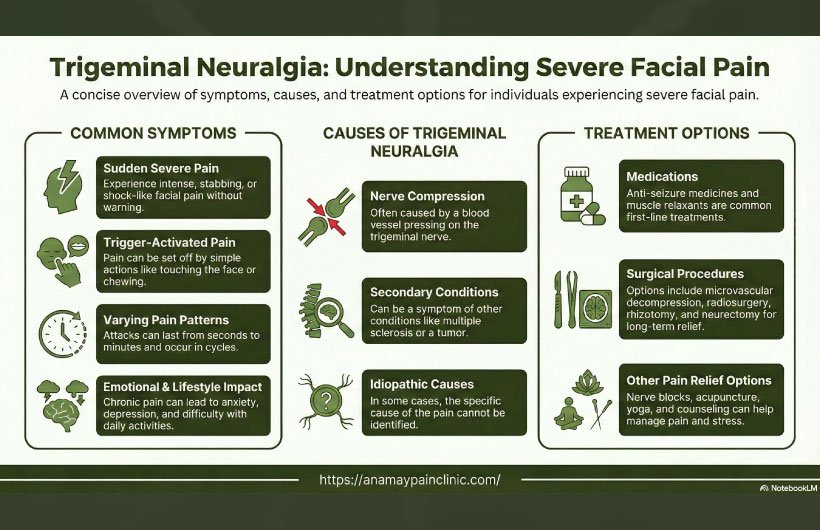
Understanding the signs of trigeminal neuralgia can help you identify it early. Common symptoms include:
1) Sudden, Severe Pain
- Sharp, shock-like pain lasting seconds to a few minutes
- Usually affects one side of the face
- Often described as the most intense pain imaginable
2) Trigger-Activated Pain
Everyday actions can trigger facial nerve pain, such as:
- Washing your face
- Chewing or speaking
- Brushing teeth
- Exposure to wind
Even a light touch or vibration can provoke an attack.
3) Pain Patterns Vary
- Some patients experience brief attacks with pain-free intervals
- Others feel more constant burning or aching pain between intense episodes
4) Emotional and Lifestyle Impact
The unpredictability and intensity of pain can lead to stress, anxiety, or social withdrawal, affecting daily life significantly.
What Are the Causes of Trigeminal Neuralgia?
Knowing the root cause of your facial nerve pain is key to effective treatment. Trigeminal neuralgia is usually caused by:
1) Nerve Compression
A blood vessel pressing on the trigeminal nerve near its brain connection can wear away its protective coating, leading to painful signals.
2) Secondary Conditions
Less commonly, TN may result from:
- Multiple sclerosis
- Tumors pressing on the nerve
- Facial trauma
3) Idiopathic Causes
Sometimes, no clear cause is found. This is called idiopathic trigeminal neuralgia.
How Is Trigeminal Neuralgia Diagnosed?
At Anamay Pain Clinic, diagnosis is comprehensive and tailored to your symptoms. Key steps include:
- Medical History and Exam
Your doctor asks about your pain patterns, triggers, and daily activity effects.
- Neurological Examination
This helps identify nerve involvement.
- Imaging (MRI)
An MRI may be done to detect nerve compression or other causes of severe facial pain disorder.
Correct diagnosis is crucial, as other conditions like cluster headaches, sinus disease, or TMJ problems can also cause facial pain.
What Is the Best Treatment for Trigeminal Neuralgia?
Trigeminal neuralgia causes sudden and severe facial pain that can make everyday activities like eating, talking, or brushing teeth very difficult. At Anamay Pain Clinic, we offer trusted and effective trigeminal neuralgia treatment in Ahmedabad, focusing on long-term pain relief and better quality of life.
Since every patient’s pain is different, doctors usually use a combination of medicines and advanced pain procedures to control the condition.
Medicines for Trigeminal Neuralgia
Medicines are usually the first step in treating trigeminal neuralgia. These medicines help calm the nerve and reduce pain attacks.
- Anti-seizure medicines such as carbamazepine or oxcarbazepine are commonly used. They control pain well in many patients, especially in the early stages. Other medicines like gabapentin or pregabalin may also be prescribed if needed.
- Muscle-relaxing medicine (Baclofen) may be added to improve pain control.
Doctors carefully choose the right medicine and dose to reduce pain while keeping side effects minimal.
Surgical Treatment for Trigeminal Neuralgia
Surgery is suggested only when medicines do not give enough relief or when the nerve is under pressure.
- Microvascular decompression removes pressure from blood vessels pressing on the nerve and can give long-lasting relief.
- Radiosurgery uses focused radiation to stop pain signals. Pain relief may take a few weeks.
- Rhizotomy blocks pain by damaging part of the nerve using safe medical techniques. Some numbness may occur.
- Peripheral neurectomy treats specific branches of the nerve to reduce pain.
Doctors explain all benefits and risks clearly before suggesting any procedure.
Other Pain Relief Options
Along with medicines or procedures, some patients benefit from additional therapies:
- Nerve blocks or botox injections for temporary pain relief
- Acupuncture and relaxation therapies
- Counselling to cope with long-term pain
- Yoga and meditation to reduce stress
- Aromatherapy for comfort and relaxation
How to manage Life with Trigeminal Neuralgia?
Living with TN can be challenging, but many patients manage their pain effectively with treatment and lifestyle changes.
Tips to Reduce Pain
- Avoid triggers like extreme temperatures or strong facial contact
- Follow gentle facial care routines
- Practice stress-reduction techniques like meditation or deep breathing
If your pain significantly impacts on your daily life, Dr Megha Shah at Anamay Pain Clinic can create a personalised plan to enhance your comfort and quality of life.
When to See a doctor
Seek medical help if you experience sudden, severe facial pain, especially if it is:
- Comes and goes in sharp bursts
- It feels like an electric shock
- Occurs during simple activities like chewing or brushing teeth
Early diagnosis and treatment can prevent pain from becoming more frequent or debilitating.
Final Thoughts
Trigeminal neuralgia can be a debilitating condition, but the right care can make a meaningful difference. With accurate diagnosis, personalised treatment plans, and advanced pain-relief techniques, many patients experience long-term improvement in their quality of life. Consulting an experienced Pain Management Specialist in Ahmedabad ensures access to evidence-based therapies tailored to the severity and cause of the condition. A skilled Trigeminal Neuralgia Specialist focuses on reducing pain, restoring comfort, and helping patients regain confidence in their daily activities. If persistent facial pain is affecting your well-being, seeking expert guidance is the first and most important step toward lasting relief.